 As you might be aware from reading my blogs, crafting is one of my other hobbies and when crafting and history meet, I’m even happier! This week (May 8th & 9th 2018), I attended a 2 day workshop on how to make natural inks and paints from plants at the Botanic Gardens in Cambridge. The course was run by artist Nabil Ali and I think was one of the best workshops I’ve ever done.
We started the first day by looking at some of the historical texts that mention the making of inks. These included texts from Roman times, through medieval and even a recipe to make oak gall ink by Sir Isaac Newton.
We looked briefly at how to make our own charcoal from willow or peach stones. Willow can be put in an old biscuit tin with holes in the lid and heated for a couple of hours. Using peach stones for charcoal was mentioned by Cennino d’Andrea Cennini a 15th century Florentine artist in his book ‘Il Libro dell’ Arte’ but Nabil told us to beware as burning the stones gives off poisonous arsenic, so must be done outdoors!!!
Oak Gall Ink
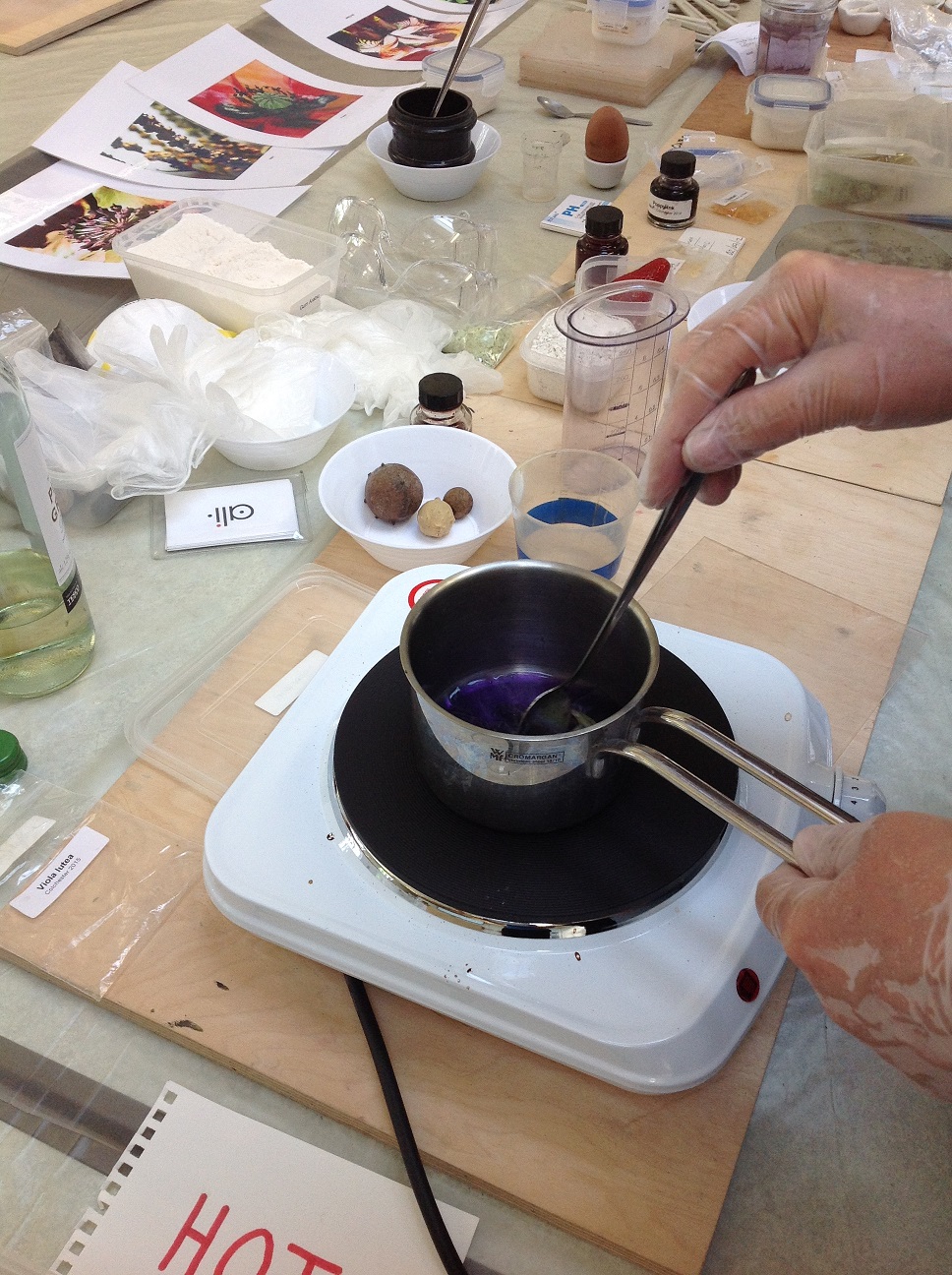 We then moved on to one of the most famous of natural inks, oak gall ink. The earliest reference to the use of oak gall ink was fom a very old formula written by a Greek called Philo of Byzantium (280-220 BCE) and Nabil told us oak gall ink was used right up to the 1970s in Germany. It is made from a growth on oak trees caused by the gall wasp. Nabil showed us 3 different types of gall, the Portugese gall was huge, the Turkish gall was the next biggest and then the British gall, which is quite small. Newtons recipe for oak gall ink was made with ale and Nabil had tried recreating his recipe but didn’t find it to be a good one so we used wine to make our ink. Oak gall ink is very permanent and in a previous workshops where I’d used it on vellum, I was unable to completely scrape the ink off the page. This is due to the high tannin content in the ink. For this reason Nabil told us that it was often used in legal documents such as laws, so that the script could not be altered or changed in any way. Modern British laws are still printed on vellum for archival purposes as vellum (prepared calf skin) can last a 1000 years or more.
Nabil showed us how to make the ink. We first needed to smash the galls, which we did by stomping on them, then we weighed them. The galls were then heated in wine. To make the oak gall ink we used the following formula:
Number of oak galls (say 6 for example) x 12 = the amount of wine needed in grams (so for 6 galls that would be 72grams of wine ).
We also needed to add gum arabic to the mix. GA is a tree resin from the Acacia tree. It acts as a binder in the ink. The binder helps the ink stick to the paper and disperses the pigment through the ink.
The weight of gum Arabic that we needed was the same weight as the oak galls.
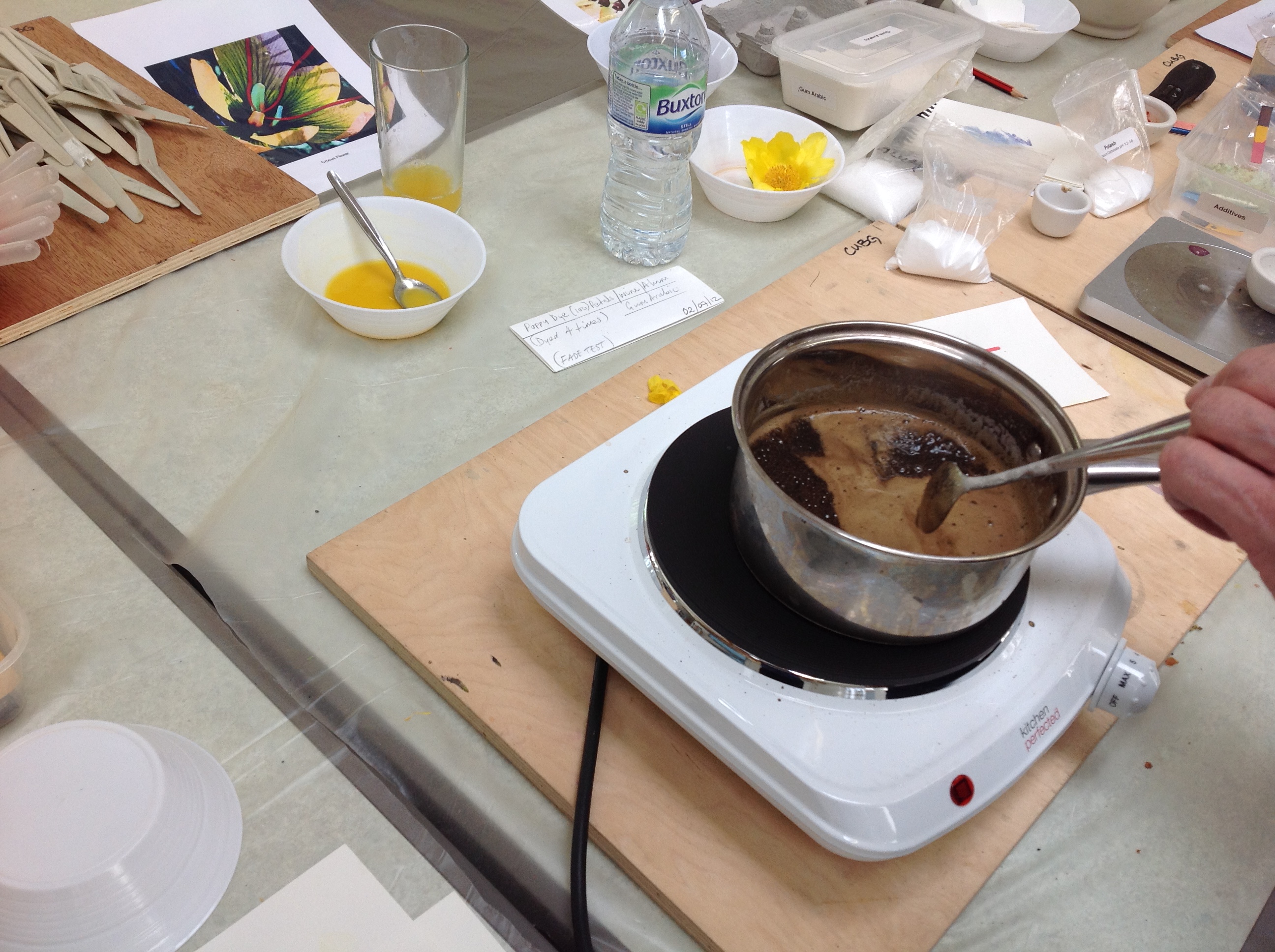
Once all this was added to the pan we heated it up on an electric portable cooker ring to reduce it down for about 20-30 minutes. The GA made the ink froth up so it is important to only half fill the pan. We then added iron sulphate to the pan. Iron sulphate is a mordant used in the natural textile dyeing industry. In the textile industry a mordant would be used to help fix the colour in when washed but although this is not so important for inks, the mordant did help to bring out the colour of the ink. Nabil preferred to call them additives. Grapefruit seed extract can be added to the ink in a 1% ratio to help prevent mould. This was done in a well ventilated room so the fumes from the alcohol or the additives weren’t overwhelming.
The left over galls can be dried and crushed and will give a dark brown pigment.
 Viola Lutea ink
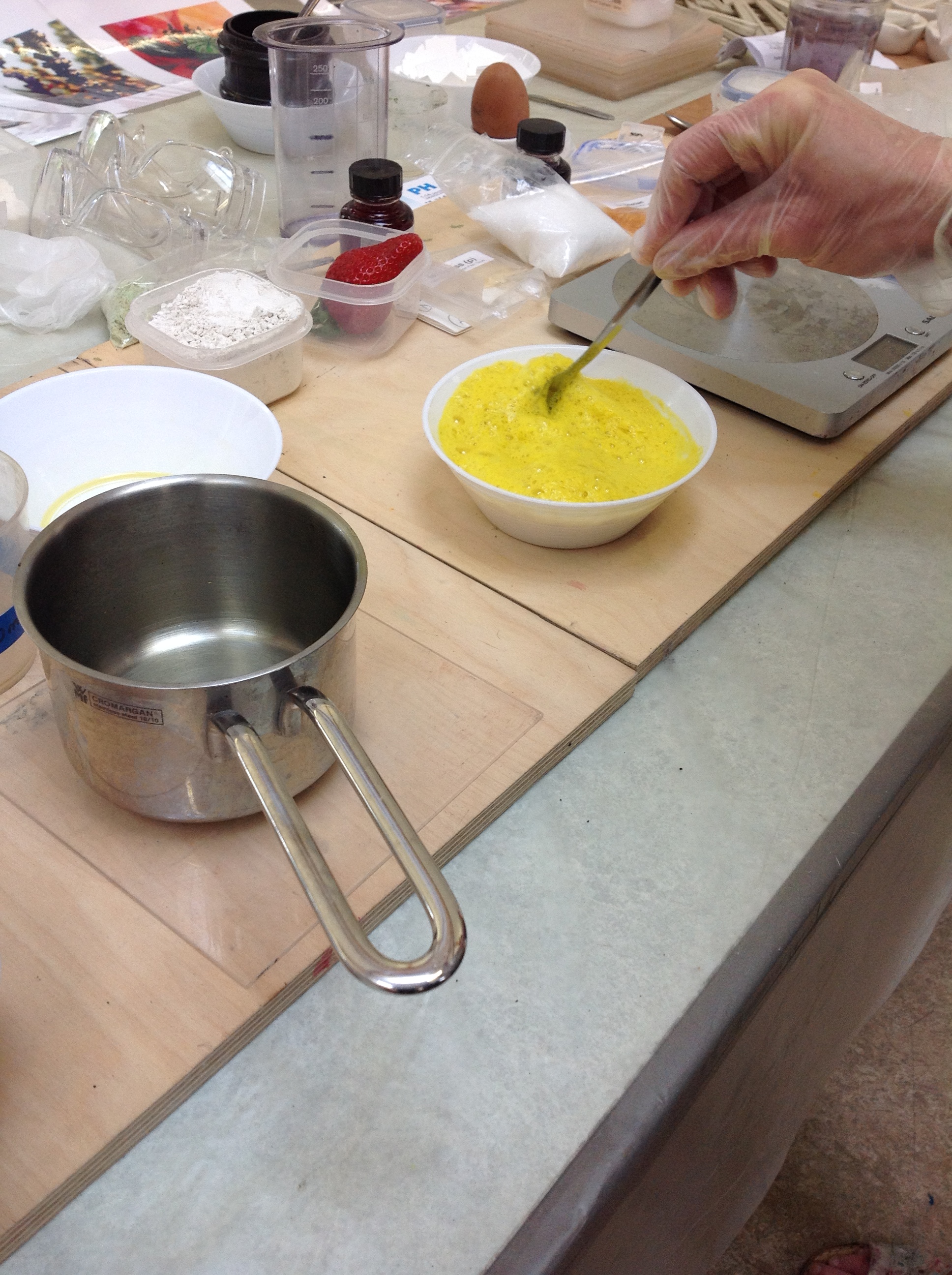
This beautiful mountain pansy gives the most wonderful yellow colour and was next on our agenda. To make it we used 50 ml wine, 50 flowers and a teaspoon of aluminium sulphate (alum) as a mordant. Again it was allowed to reduce for about 20 minutes or so. To change the colour from an ink to a paint, 3g of chalk dust was added. This acted as a filler. Yellows are the least stable colours, Weld makes the most stable colour.
Fillers for paint making
– cat litter (mineral clay)
– cuttle fish bone
– chalk
– gesso white
– marble dust
– egg shell white
– lead white
– talc
– flour
Additives (mordants)
– Iron sulphate
– Aluminium sulphate (alum)
– Carbonate of soda
– Tin
– Chrome
– Copper sulphate
– Potash
Be careful, these additives can be toxic and should not be allowed near children. So ink making should be done outside or in a well ventilated room. Don’t stand over the pot too much.
Preservatives
– Grapefruit seed extract
– Cloves
– Preventol
– Rosemary extract
– Vinegar
Binders
– Gum arabic
– Gum tragacanth
– Rabbit skin glue
– Isinglass
– egg white/yolk
 Purple Iris
We used purple iris flowers next to make an ink, Nabil asked us what colour we thought it would yield and were surprised to find that if alum was used as the mordant and chalk as the filler, it gave a lovely green paint.
Onion skins
I’d used onion skins on a dyeing course before so was familiar with the sort of colour that they gave. It makes a lovely orange paint. The recipe was as follows:
– 3 g onion skins
– 10g alum
– 100g white wine
– 3g powdered chalk
It was made in a similar way to the oak gall and viola ink by reducing the liquid down by about half once the onion skins were added to the wine. Then adding the alum and then chalk if you want paint rather than ink.
Madder
Nabil told us about making madder paint. Madder is a root from the plant ‘Rubia Tinctorum’, which is part of the coffee family. It is used in dyeing and can also be used to make an ink/paint. Nabil said it was important not to let the mixture boil but to keep it to 60-70 degrees, or it releases a brown from inside the root.
Ornamental currant
This lovely bush is covered in pink flowers in the spring, which the bees absolutely love and we’re lucky enough to have one in our garden. It’s official name is Ribes sanguinem. The currants are the part that’s used and can yield a blue paint. When mixed with soda it gives a blue, with potash it gives a purple. Potash and chalk gives a purple/grey. Mixing with tin gives a lovely magenta. Tin & egg shells gives a lovely pale lilacy colour.
Rue leaves
Ruta Graveolens (Rue) is a lesser known herb, getting the juice on the skin can cause terrible skin irritation, so gloves need to be worn to handle it. It is mentioned in the Montpellier ‘Liber Diversarum Arcium’, a medieval handbook of painting from the early 15th century. When mixed with verdigris, rue will give a lovely turquoise colour. Verdigris is the lovely green that you see on old copper. Nabil explained that verdigris can be made by suspending copper plates over vinegar in a sealed container. The copper will verdigris in a few weeks. Care should be taken though as verdigris is poisonous.
To make the ink put fresh leaves in a mesh bag and whilst wearing protective gloves, squeeze the juice out. Then add a teaspoon of verdigris. This makes ‘historic green’ and it is a very stable colour. Personally I’m not sure of using this, some artists lick their paint brushes and I can’t image that could be good! Artists beware!
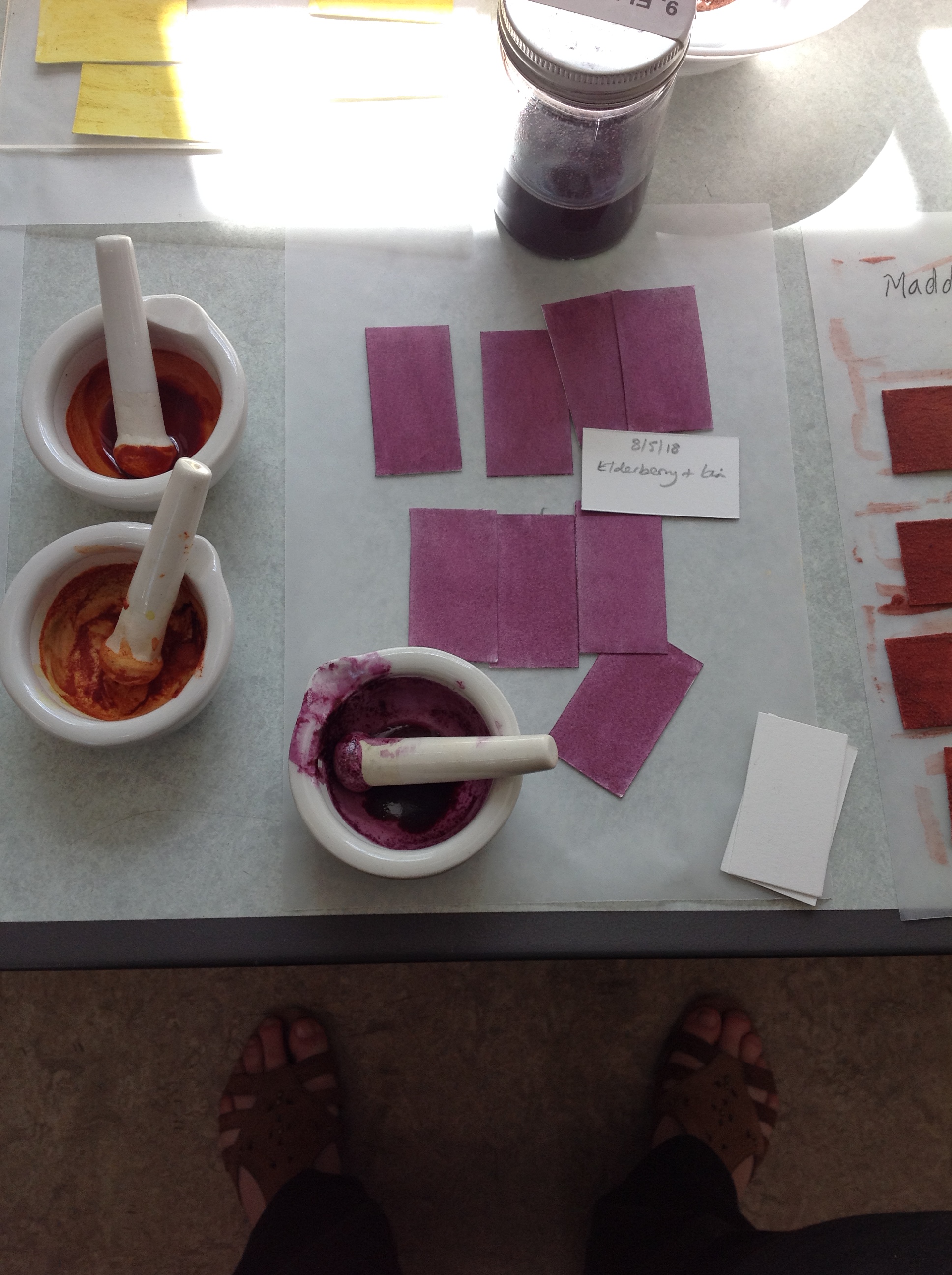 Elderberry
We are all familiar with elderberries here in the UK, I’m not sure how widely spread they are around the world. It’s a wonderful bush/tree. The flowers yield elderflower cordial and wine. The berries can be cooked and eaten, made into crumbles and sauces. They should never be eaten raw as there are toxins in the berries. I have also now found out that they make great ink and paint too and surprisingly produce a green colour. However if alum and chalk are added, it will yield a purple. This colour will fade quickly.
Coreopsis
This lovely yellow flowered plant yields a red colour. Like dyeing different additives will give different colours.
- If mixed with chalk and GA it gives a terracotta colour.
- If mixed with aluminium hydroxide it yields a deep orange.
- With bicarbonate of soda it gives a deep reddish orange.
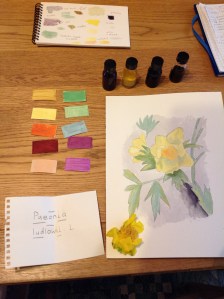
Paeony Ludlowii
I found this lovely poppy in the grounds of the botanic garden and it’s pictured here. Nabil was lucky enough that they let him pick a few flowers to make ink. The recipe that we used was :
– 100g water/wine
– 2 flowers (adding more flowers will make the colour stronger)
– 2 tsps. alum
Reduce to 30g then add 1 tsp of potash.
Using mineral clay (cat litter) as a filler yields a grey/yellow. Adding fillers makes the colour much paler.
Ash Fungus
One of the other ladies on the workshop had brought in some ash fungus from home. Looking on the net, it appears to be ‘Daldinia Concentrica’. Also known by the much more charming and memorable name of ‘King Alfred’s Cakes’. For anyone that doesn’t know the famous tale of King Alfred, in the 9th century Alfred after losing to the Vikings and seeking refuge was put in charge of watching some cakes or loaves of bread to make sure they didn’t burn, but so distracted by his problems was he that he forgot the cakes, which burnt and he was roundly scolded. Indeed this is exactly what the fungus looks like. It has concentric black rings running through it when you cut one open. It looks much like charcoal and indeed can be used as tinder to light fires. Our recipe was as follows:
50 g of fungus
25g gum arabic
200g iron sulphate
It made a coffee brown colour which when china clay was added made a biscuit type colour. Adding potash to it made a dark grey/green.
Purple Tulips
Purple tulip petals will yield a pale purple ink but various additives made different shades:
– 25g petals
– 100 g water or wine
– 1 tsp alum
Adding chalk as filler gives a pale green. Adding potash makes a darker green. Adding tin makes the purple more vibrant but adding chalk will make it turn green again. Cat litter as a filler gives a browny colour.
Woad seeds
These were something that I had collected myself many moons ago. I had tried to make a medieval herb garden once and woad was one of the plants I had in it. I found out that it is tremendously good at self seeding and I collected thousands of them. I eventually, for reasons I don’t understand now eradicated the herb from my garden but I still have a large wooden tub of seeds. Nabil let me have a go at making an ink from them.
This ink I got to cook up myself as they were my seeds. A good handful of seeds was added to the pot and some wine in similar quantities to the oak gall ink. I was expecting a blue colour as I knew what colour woad gives in dye vats and indeed we did have a grey/blue. We tried various test samples. When we added alum to the ink we achieved a purple colour. When we added potash as the additive we achieved a green. By adding copper unsurprisingly we had turquoise. Adding tin made it stay purple.
I used some of this ink recently in my calligraphy class and found it to be quite a pleasant ink to work with. It was perhaps a little thin but presumably adding less wine/water to the mix would make a thicker ink. The perfect ink for calligraphy should be like a thin cream. I normally use gouache, which is easier to adjust if it starts to get too thin but I am trying to cut out plastic and cut down on waste generally so it struck me that this might be a good zero waste alternative to my usual paints.
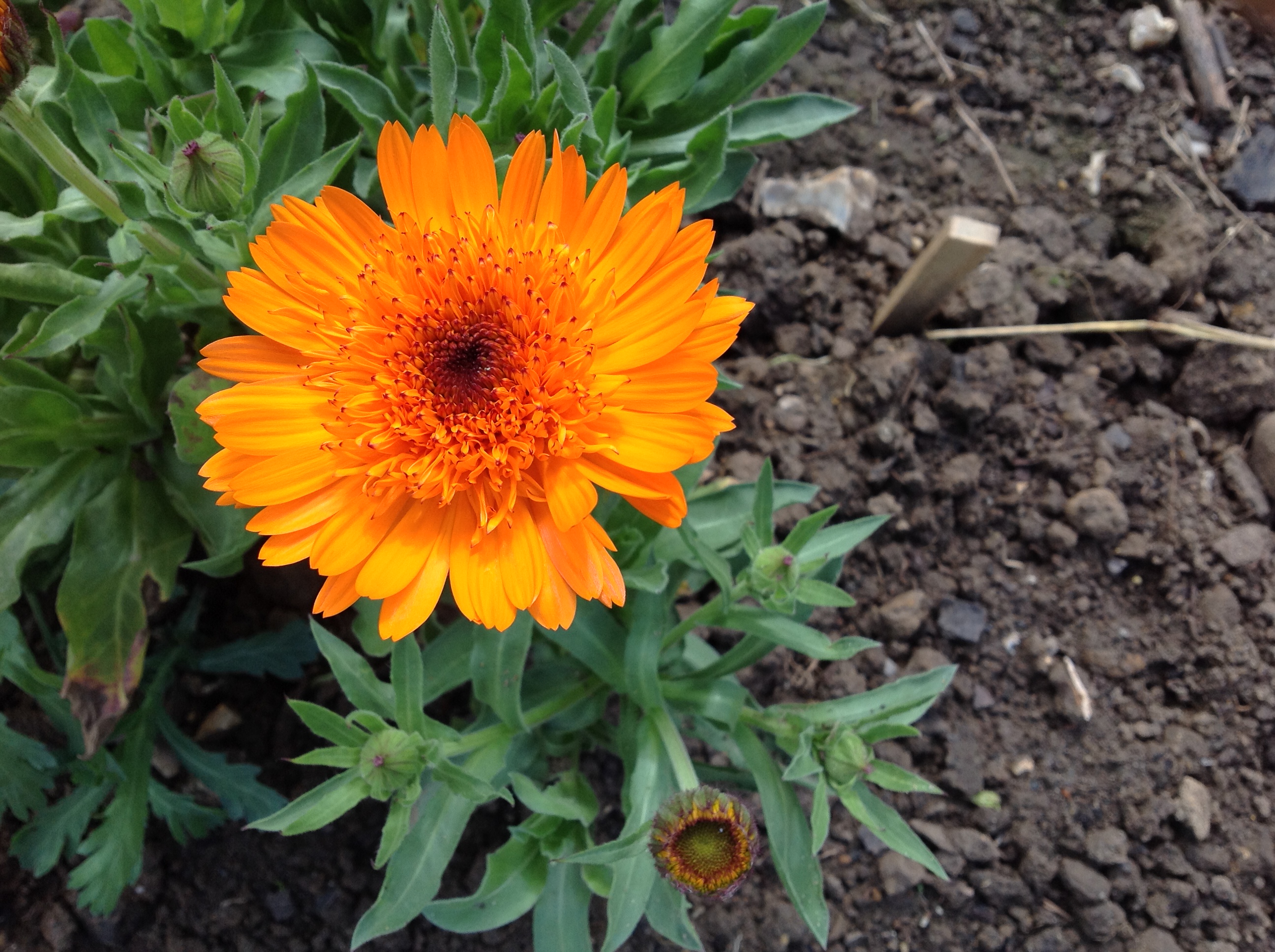 Calendula
I was pleased to see that this was going to be one of the inks we were looking at as it grows in my garden in abundance. It freely self seeds everywhere and I never have the heart to pull it up from all the cracks that it likes to seed in. I’d used it before to make ointments as it’s very soothing for the skin.
To make this ink we used 7 g of flowers, 100g water, 10g of alum, 3g of tin and 3g of powdered chalk.
It gives orange or red when mixed with dragon’s blood & gesso (Dragon’s blood is a plant resin).
To sum up, it was an amazing course, worth every penny, if I’m honest perhaps under-priced. There was lots to do, learn and keep us occupied throughout the 2 days. It opened up my eyes to the paint palette that is just waiting for me in my own garden. It probably sounds naïve but I had no idea before this course that so many colours could be made from plants. I certainly hope to make more paints in the future and I hope that if you’ve read all this you might give it a go too.


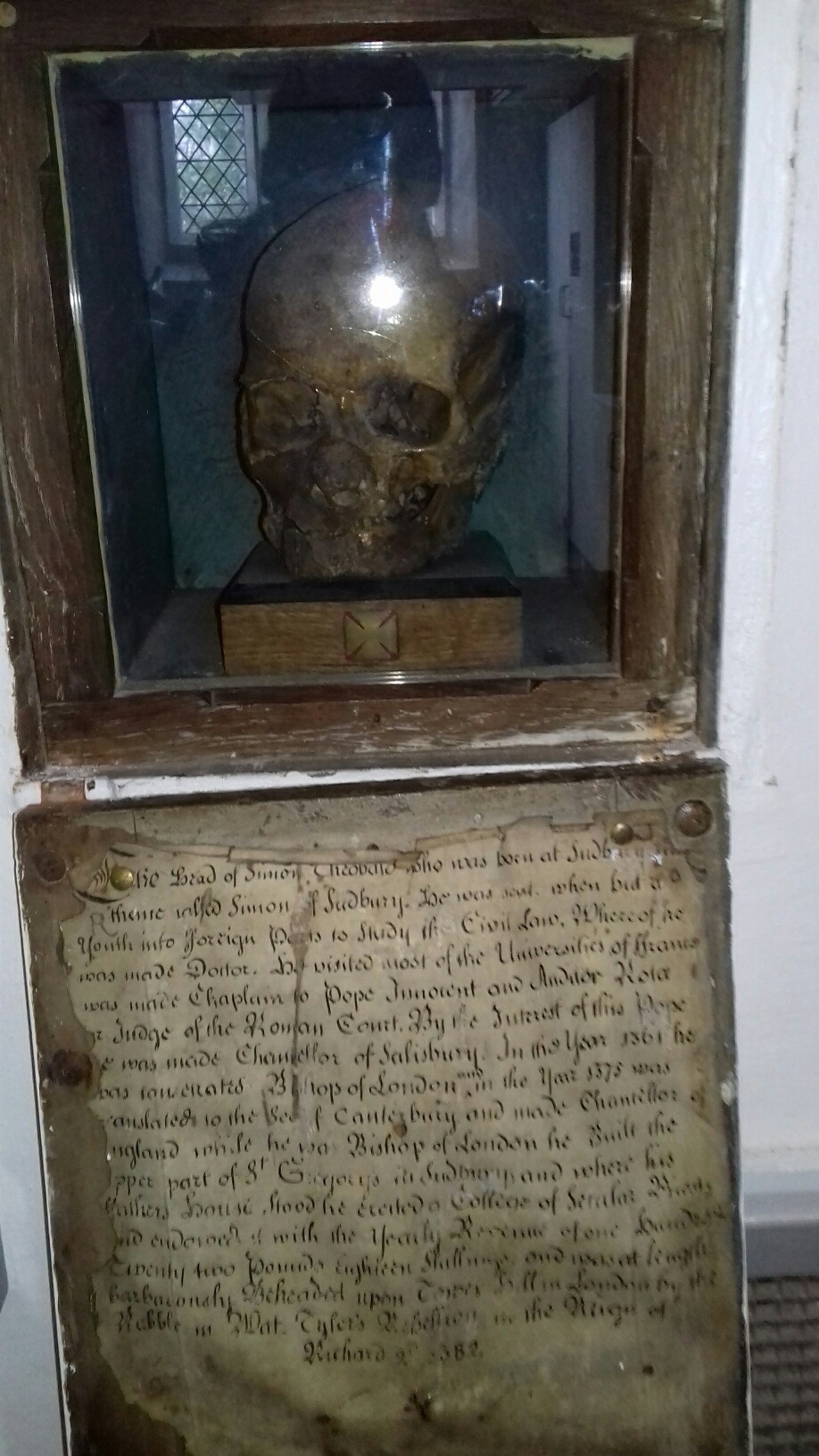 Every school boy or girl has learnt about the peasants revolt at some time during their history lessons. These days it’s usually when they’re in Year 7 (11-12 years old). History can sometimes feel a bit staid and unreal if you just read about it in a history book but today we got up close and personal with a real piece of history from medieval times.
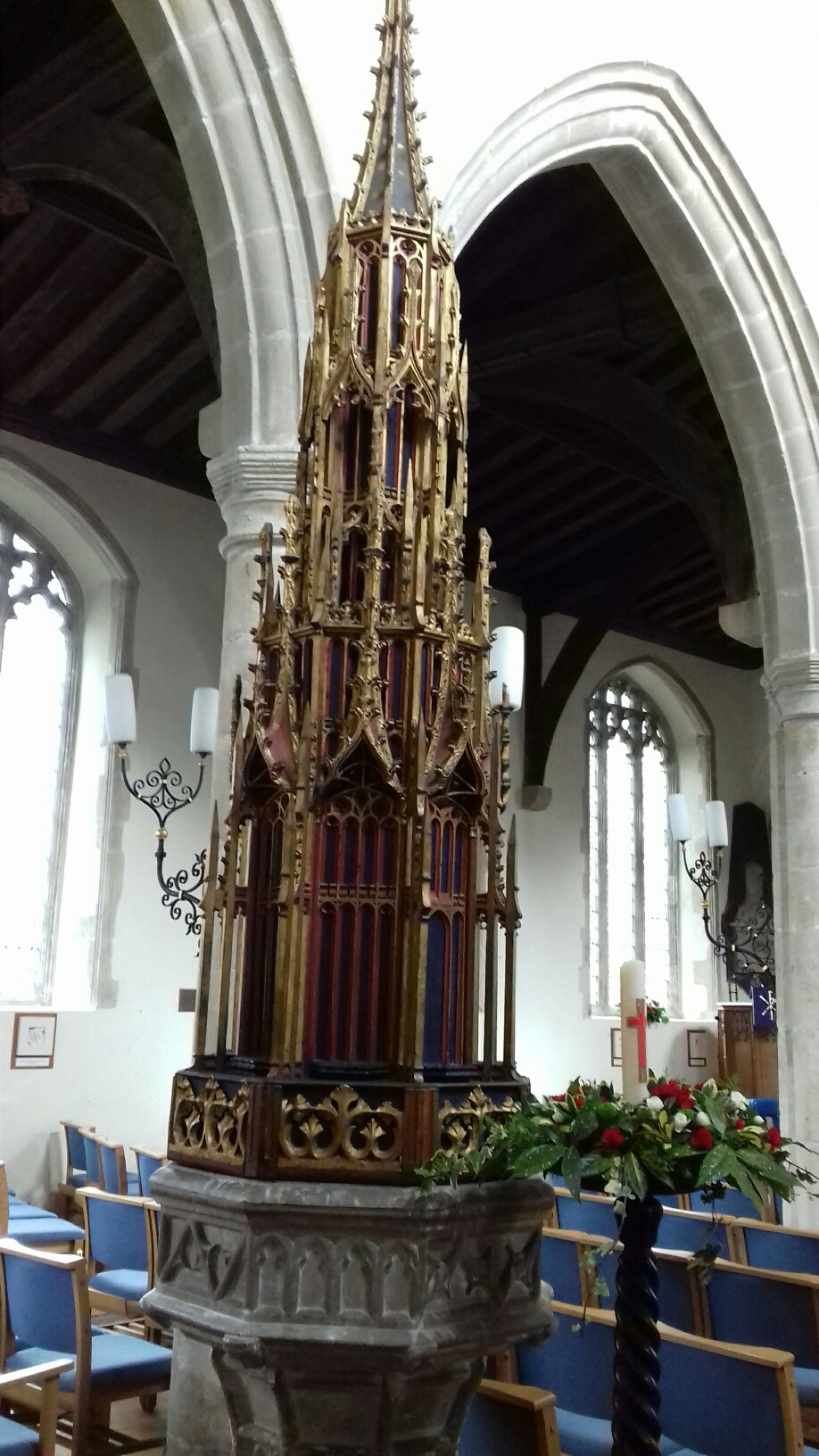 At the end of the tour however, we came to the real reason why we’d down the tour. We’d learnt a few years ago about the head of
 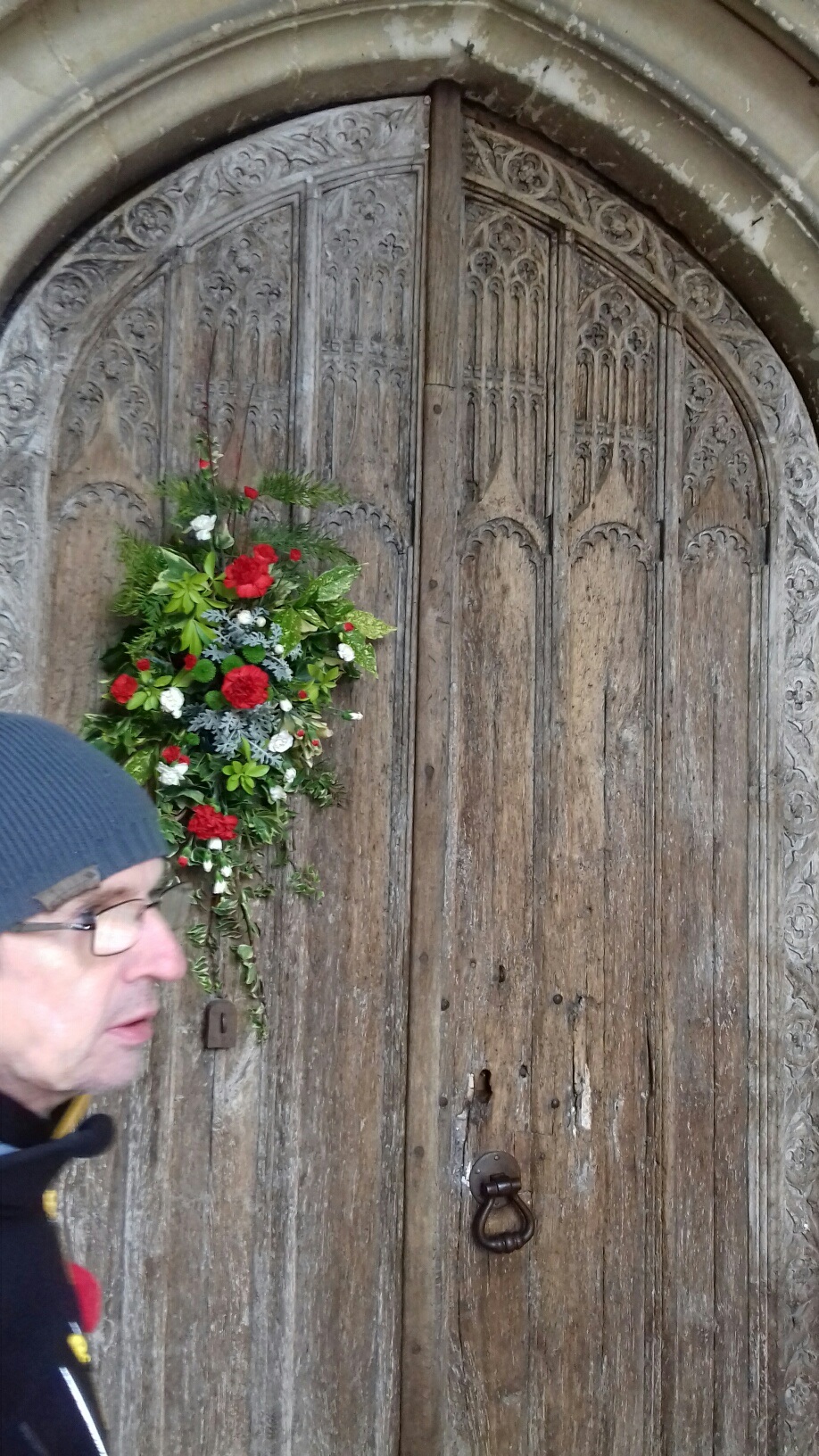 Simon (another not the original!) who showed us the head was keen to point out that it was technically a head rather than a skull as it still has pieces of mummified skin on it. The head is kept in a little wooden box in a wall within the church that can only be accessed with permission. An old note about the head is kept with it. We had seen a programme a few years earlier where the head had been take and a bust recreated of what Simon had looked like , just as they do with modern day murder victims. They had also confirmed that the head had indeed been removed with an axe and we got to see the original bust.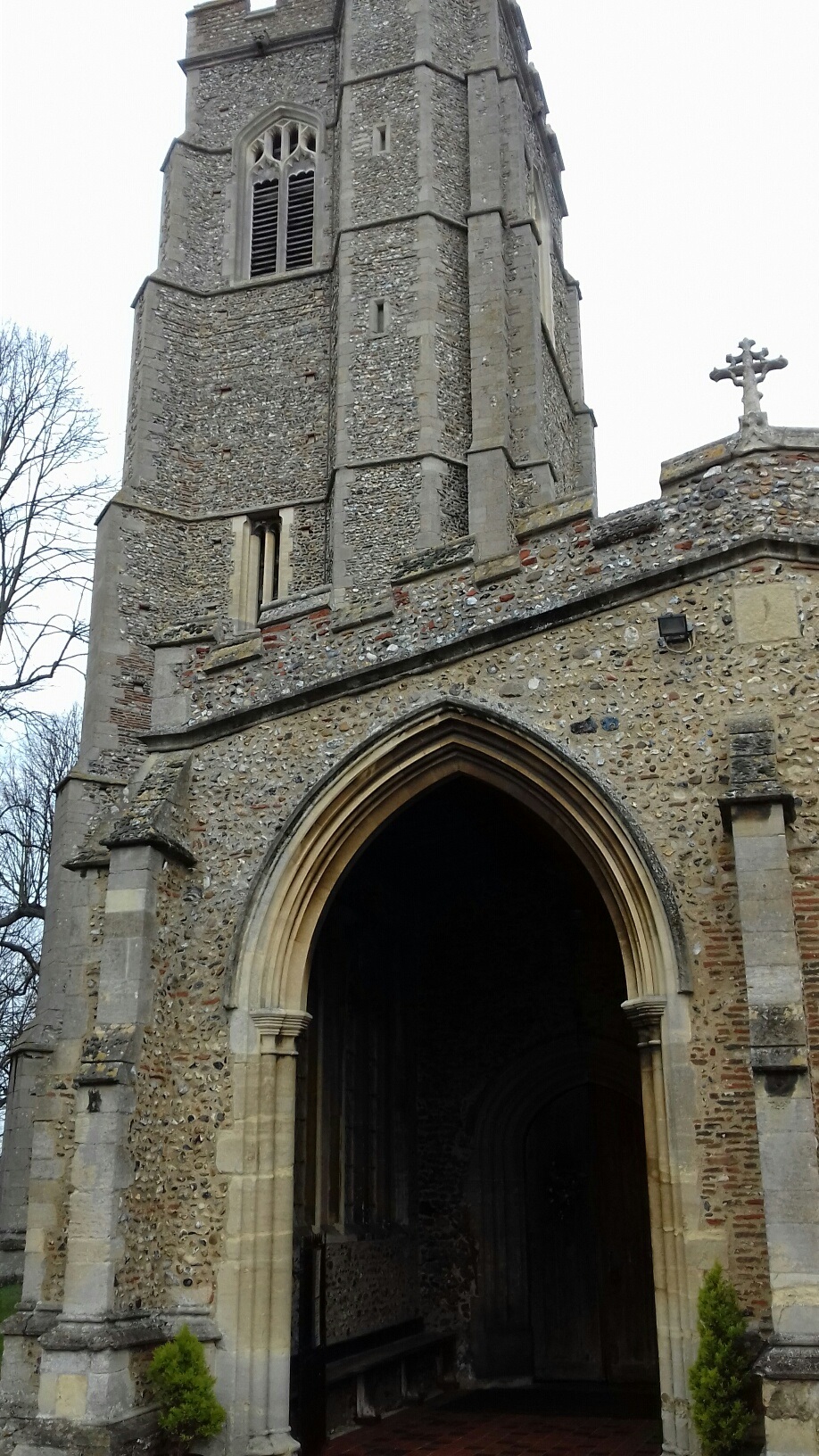
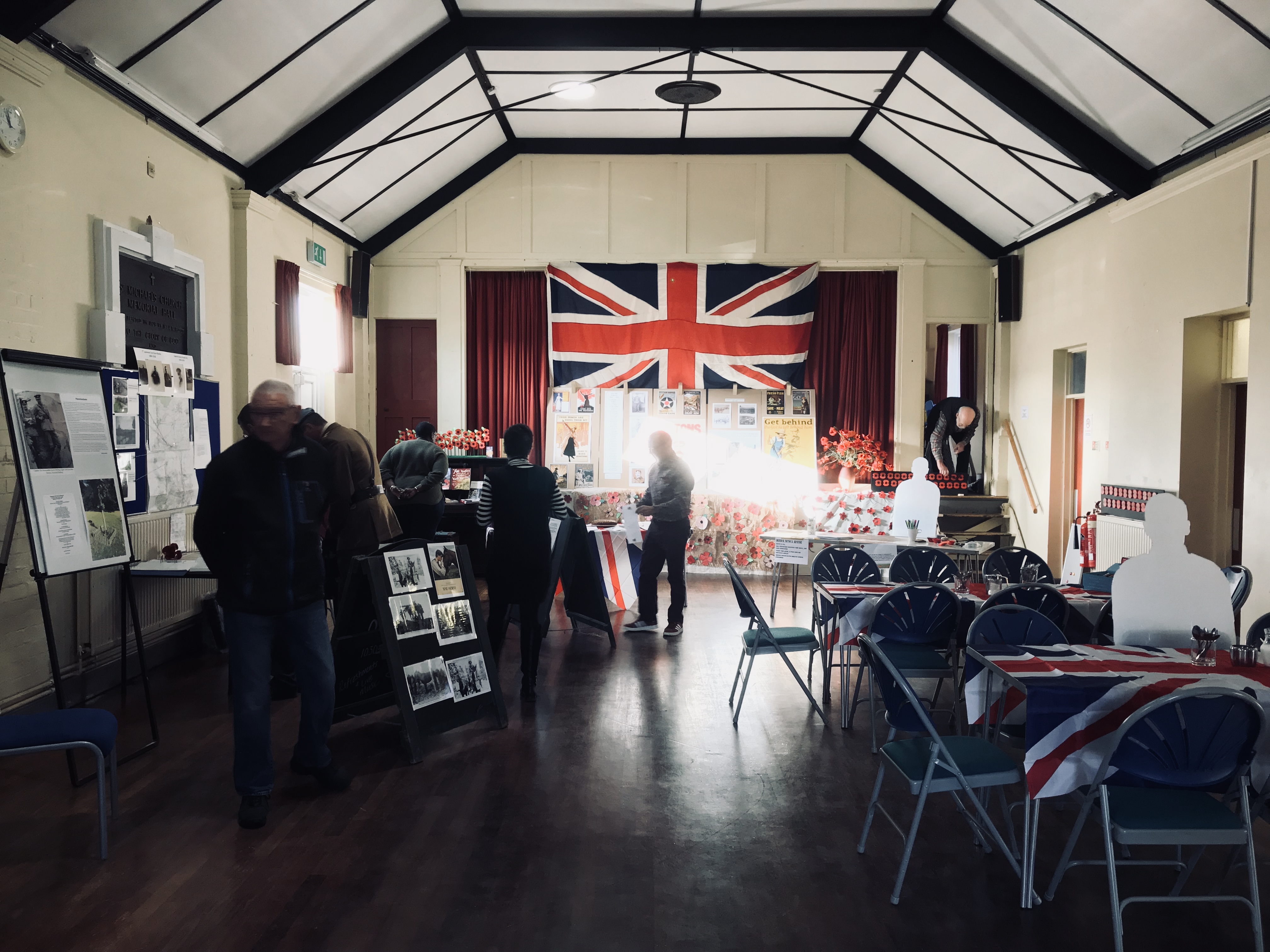
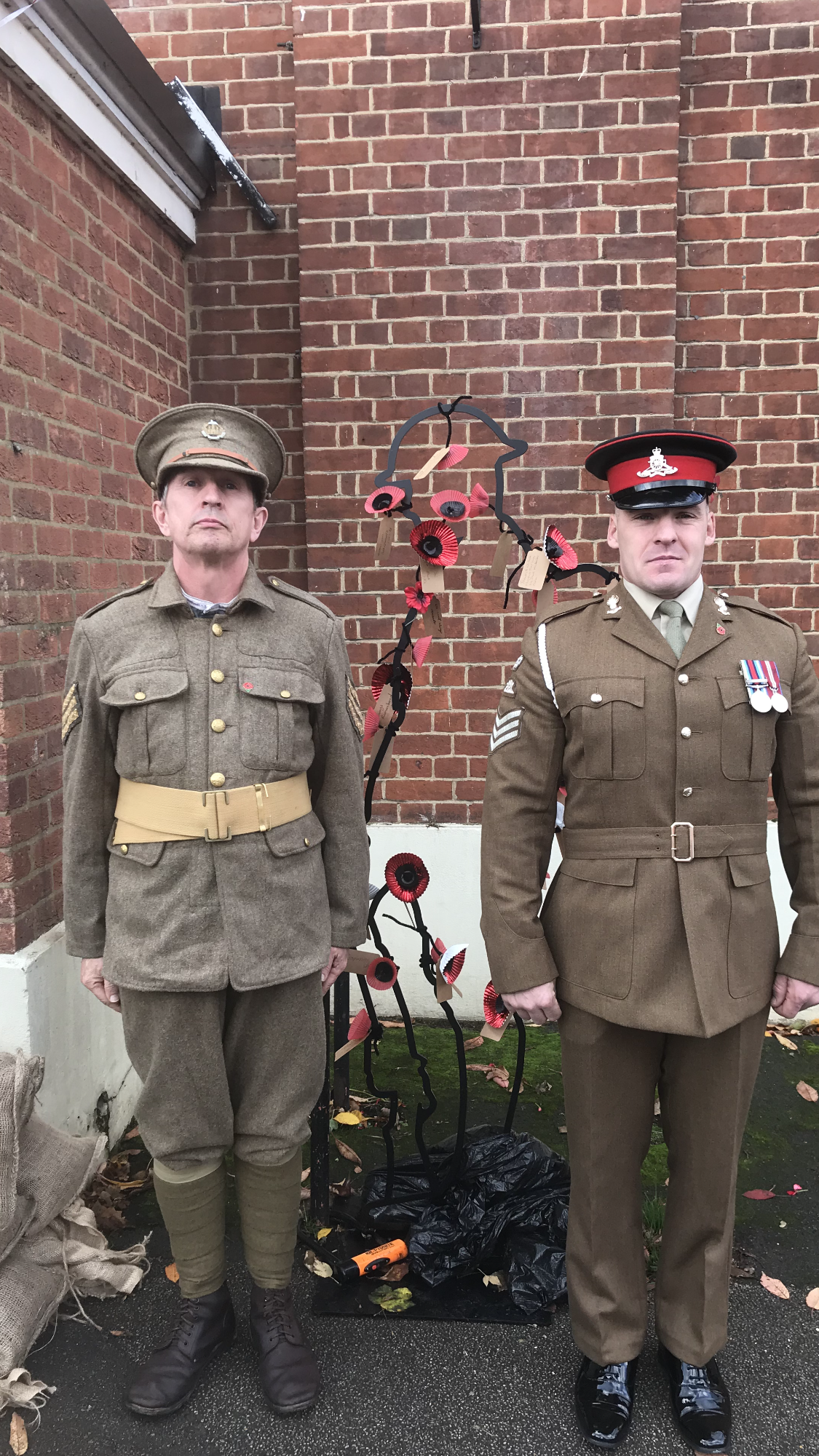 My aunt and uncle had invited us to help their village celebrate 100 years since the end of WW1 and we were very excited to be taking part in an armistice celebration. The event took place in the Ellen Petit memorial hall, on the high street, next to the Swan pub. The event was completely free for the public and our services were of course for free too. We arrived bright and early about a quarter to eight to set up. The hall was starting to look splendid with flags, poppies and various displays connected to WW1.
 The most popular object on our display, I think was the prosthetic leg that we have. It meant so much to people to see something like that as it really helped to bring home the realities of war. Along with the pieces of shell fragment, along with our newly acquired shell. It helped people to understand a little more of the horrors that the soldiers had to go through.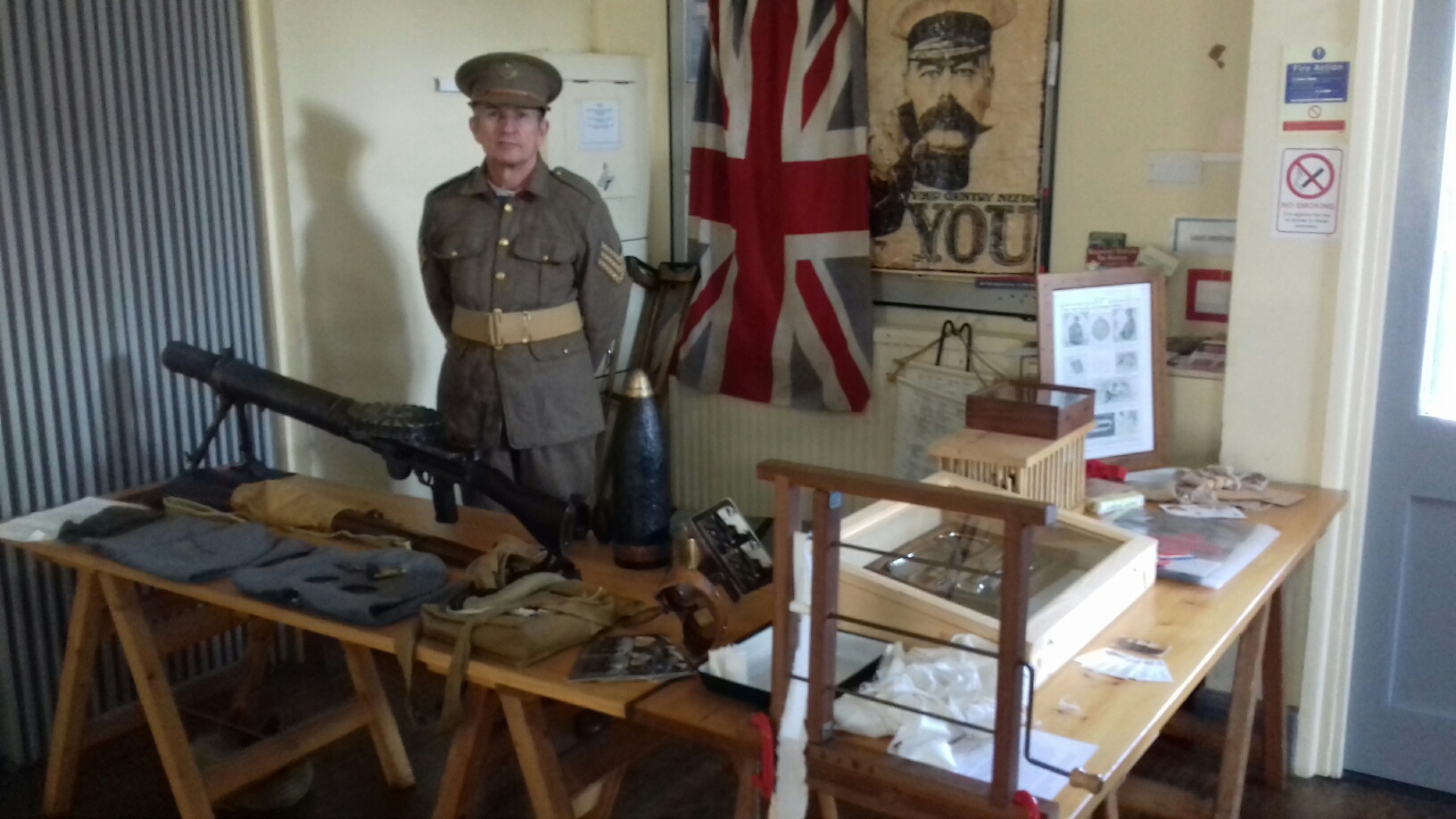
 I woke up on 20 October 2018 to the sound of church bells pealing at 7am in our B & B in Cagnoncles. I was too excited to hang around any longer so we set off early towards Briastre.
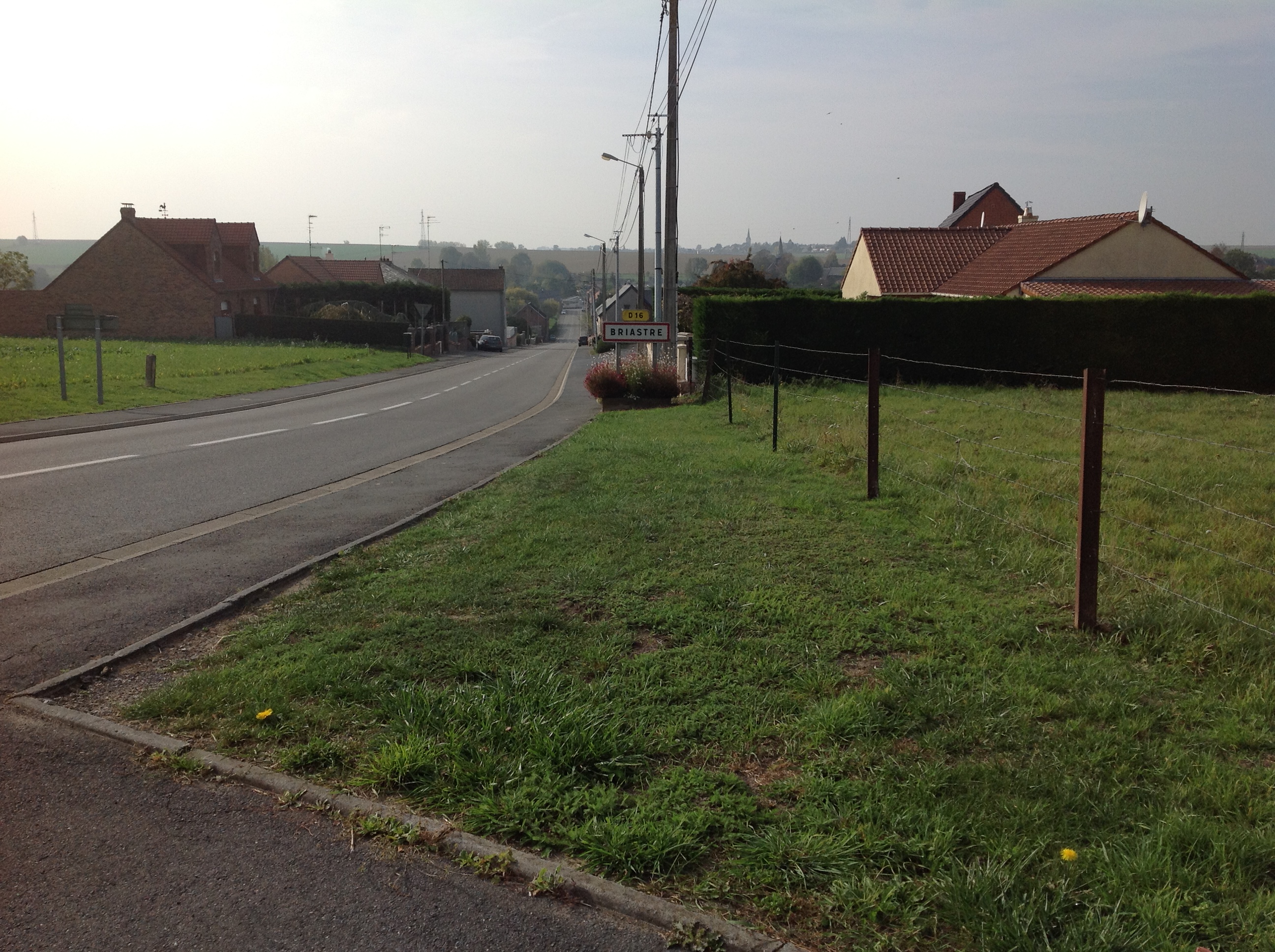 bomb, which sadly had killed some allied soldiers who had gone to seek shelter in it and was now rebuilt as it had once been. We ventured into a local café/bar for a coffee. All the locals who entered the bar came up, said hello and shook our hands. I don’t know if this is something they do for any visitor but it was a lovely greeting. The sun soon burnt back the mist and it turned into a bright shining day. We drove to nearby Briastre, a small village of about 700 souls. But we had no idea exactly where to start looking for the site that Jack had won his military cross We had some military maps that Jeremy Banning the historian who researched my grandfather had found, we had a book about the East Lancashire division in which Jack had made some annotations and we also had the citation for his medal which read as follows: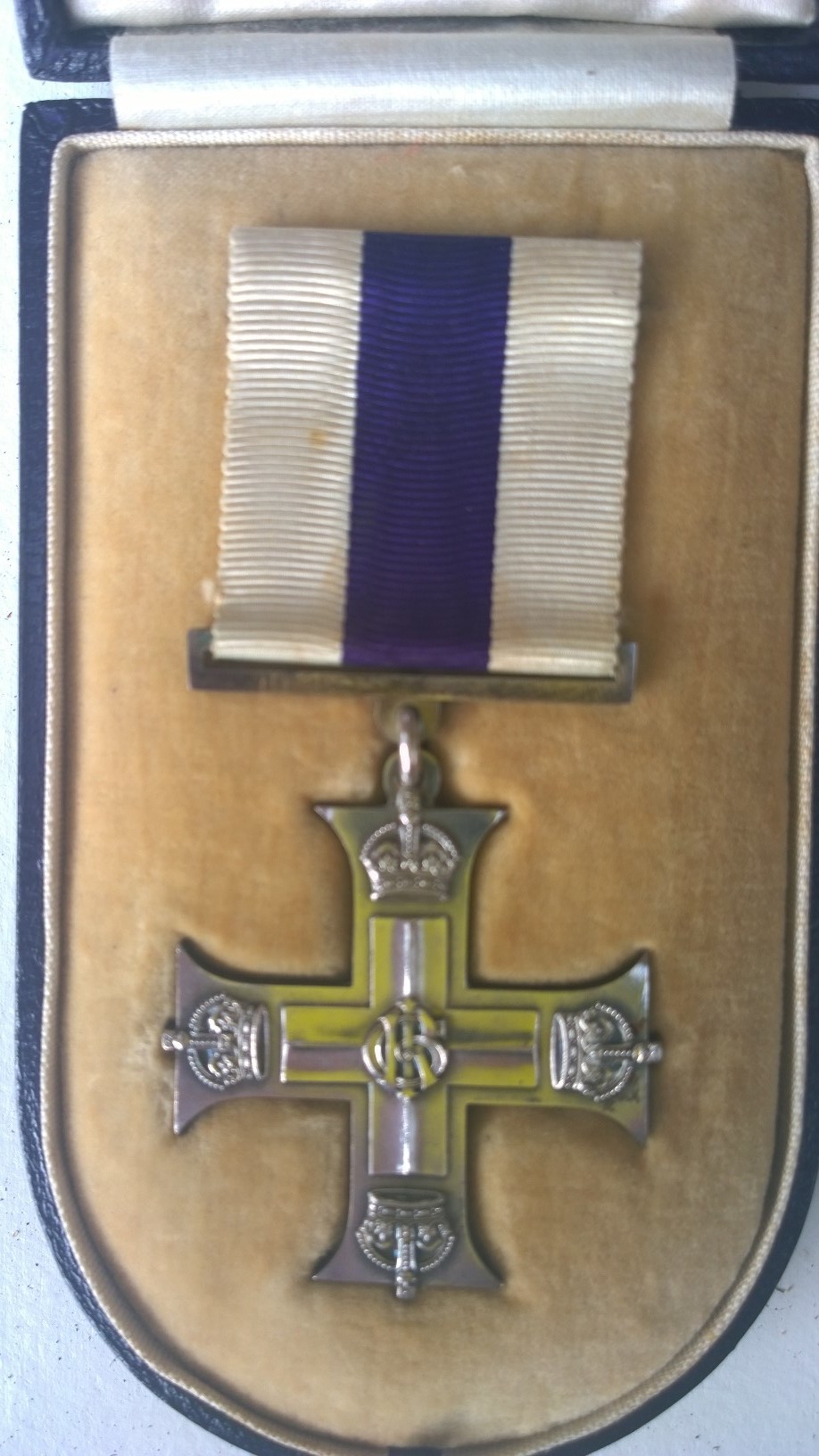
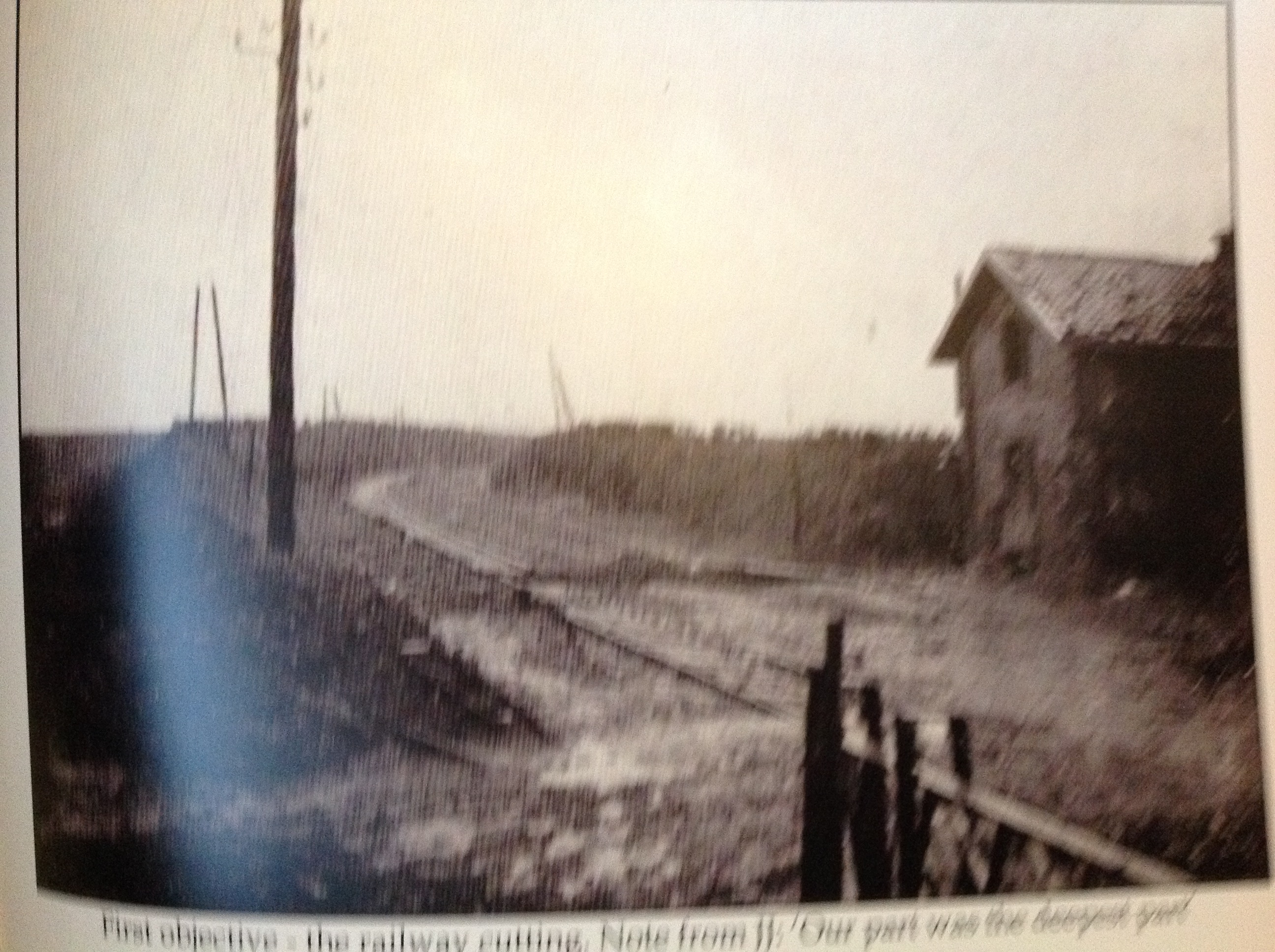
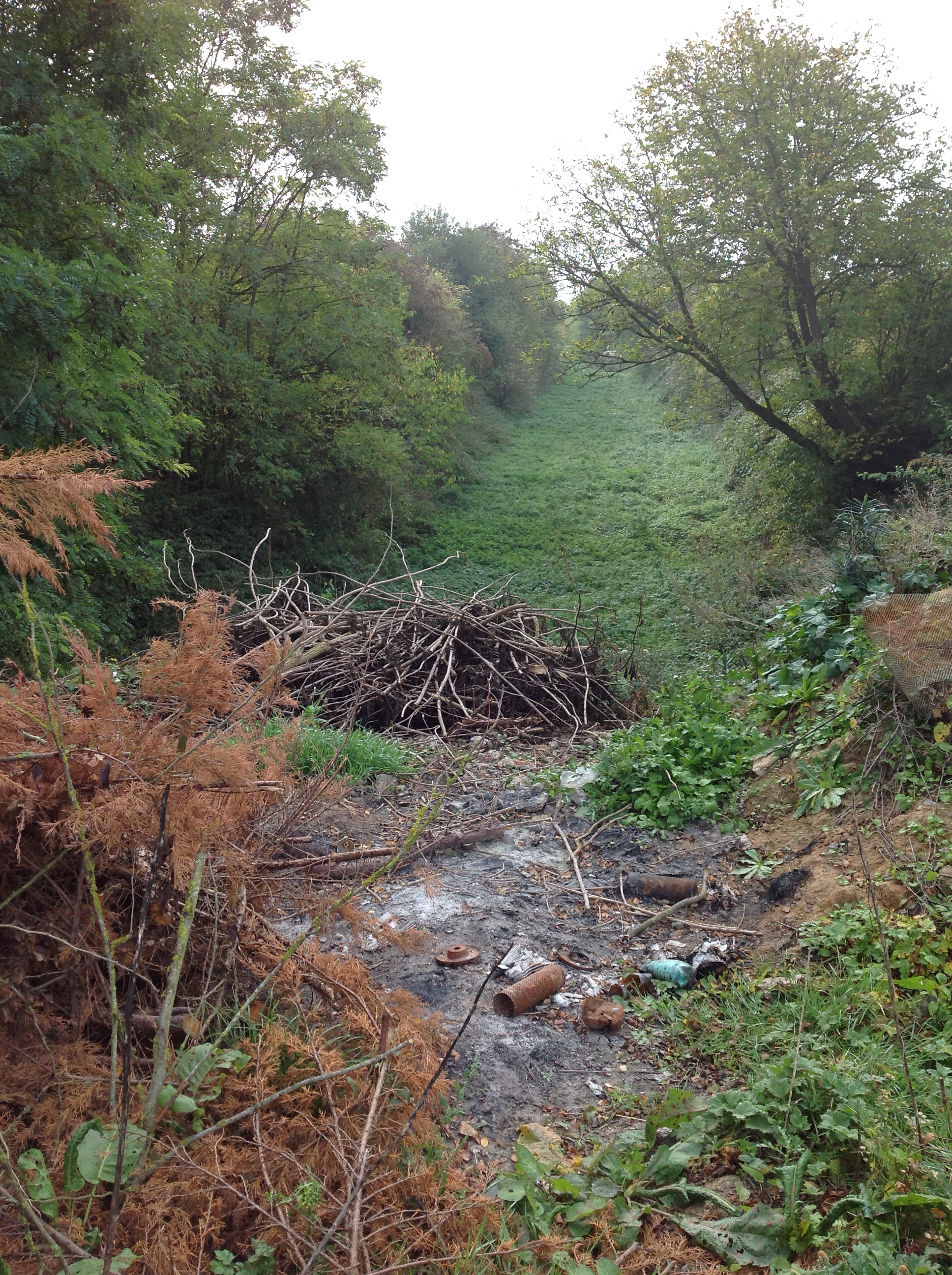
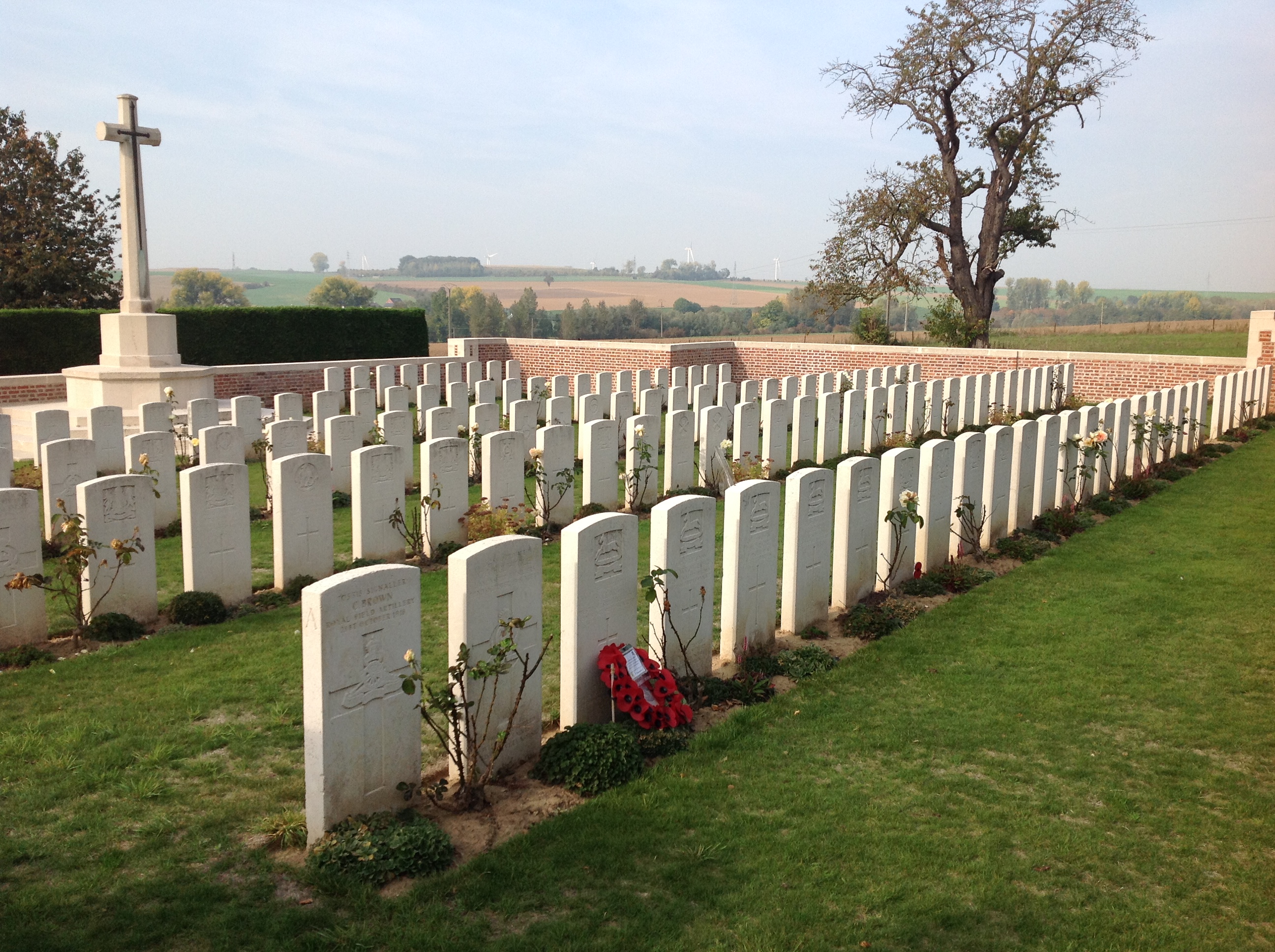
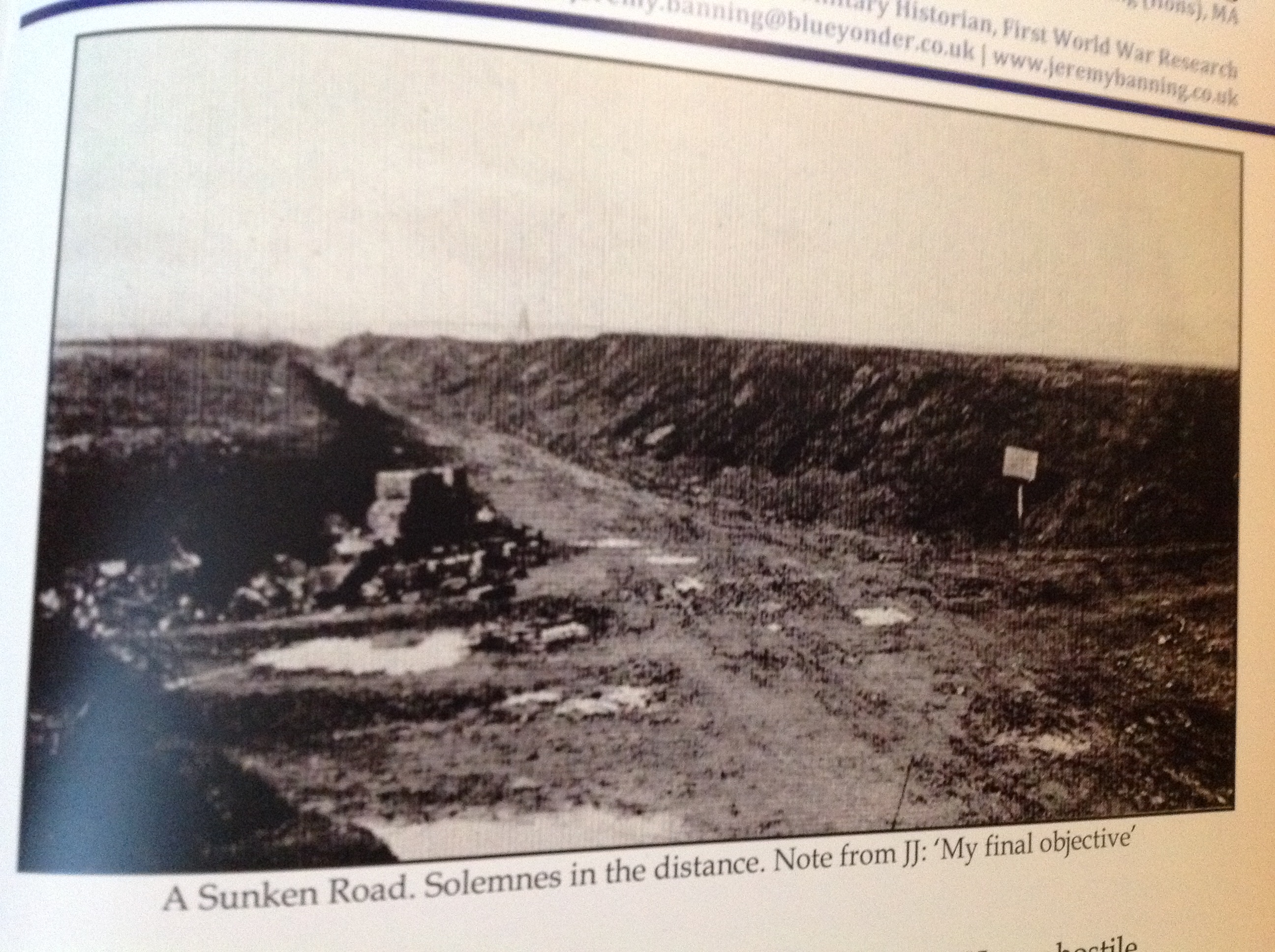
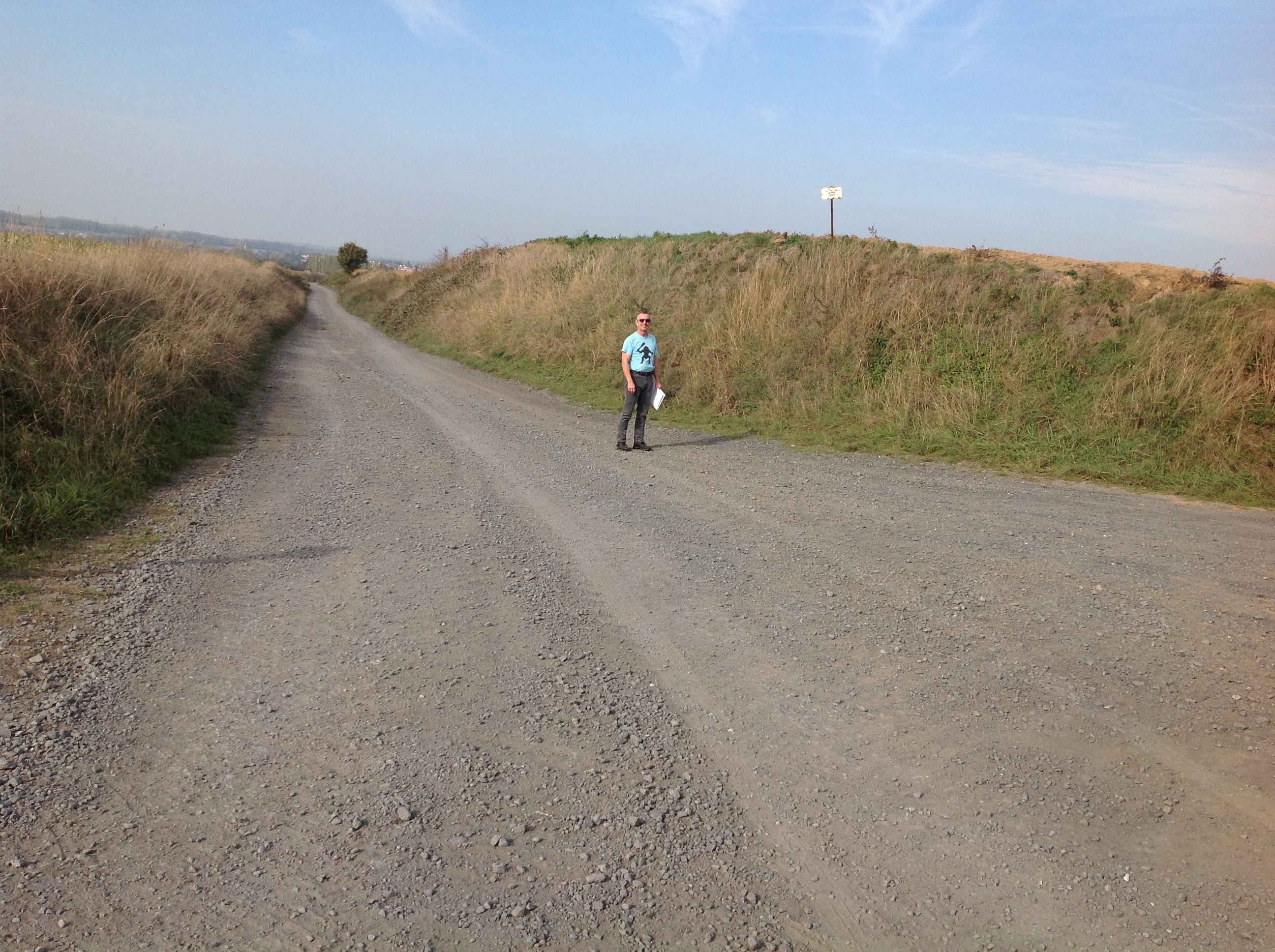
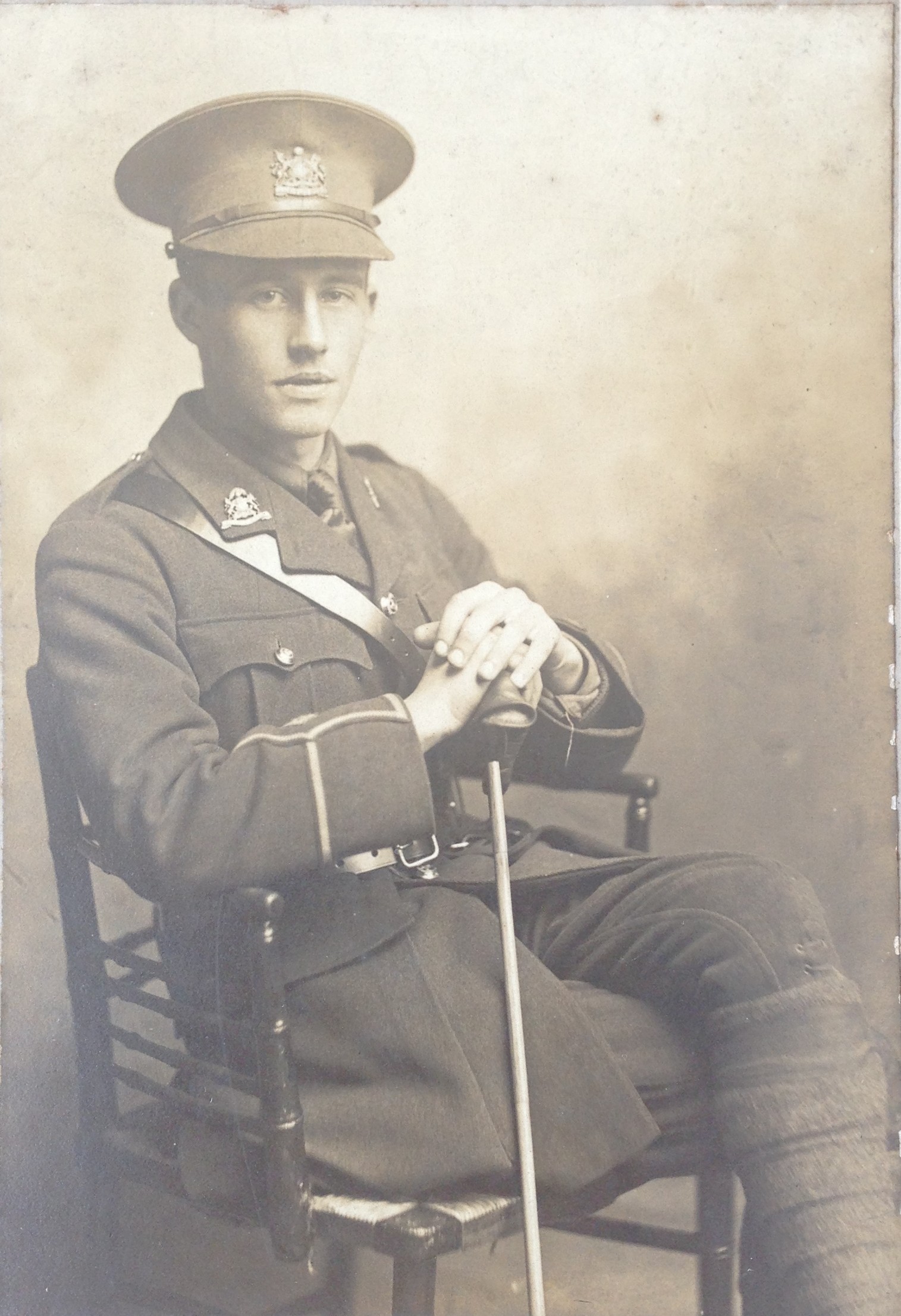
 I have just returned from one of the most special experiences of my life. I have literally trodden in the footsteps of my grandfather who was an officer during WW1 and visited the site where he won his medal 100 years ago on 20 October 1918.
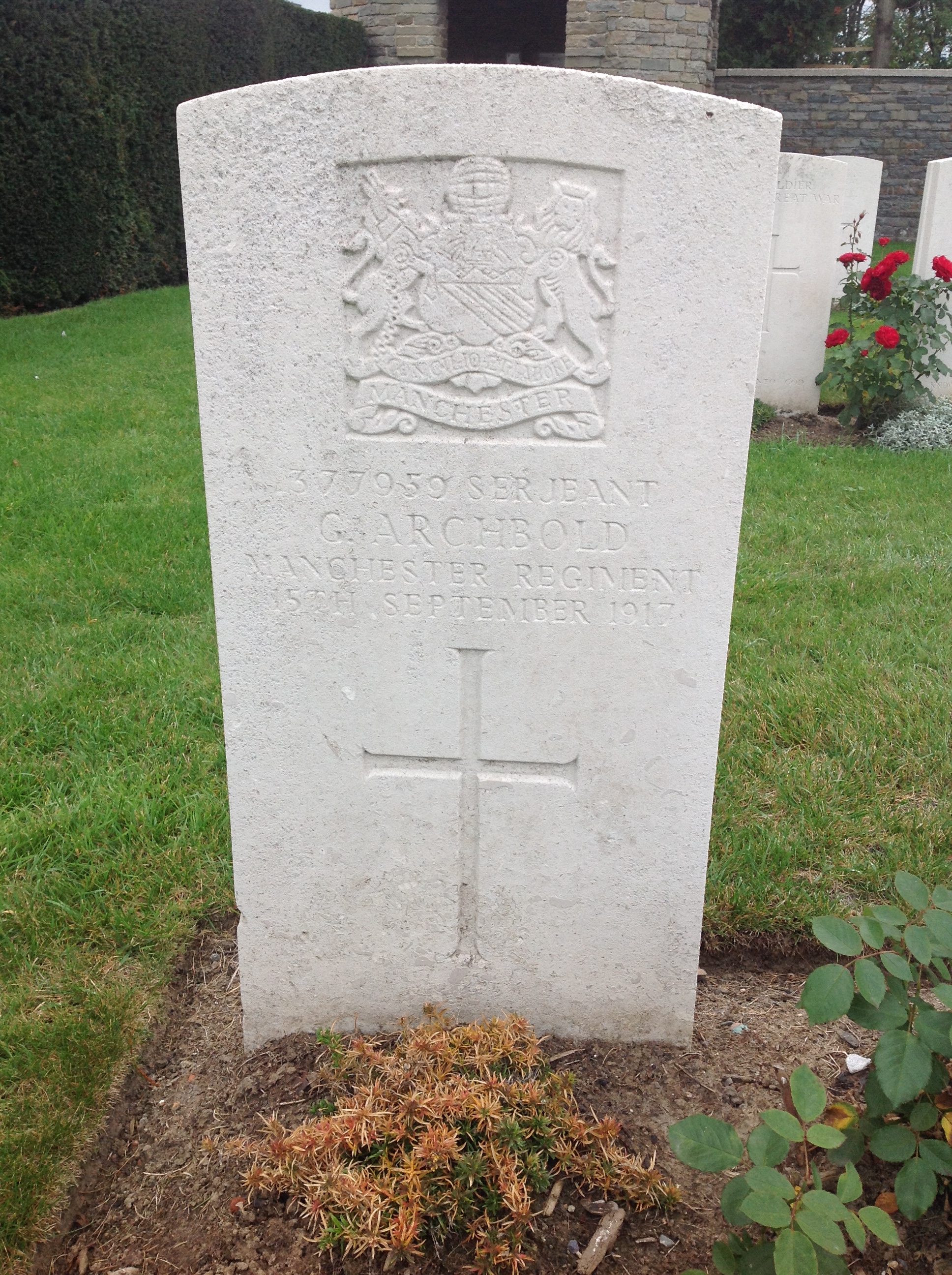
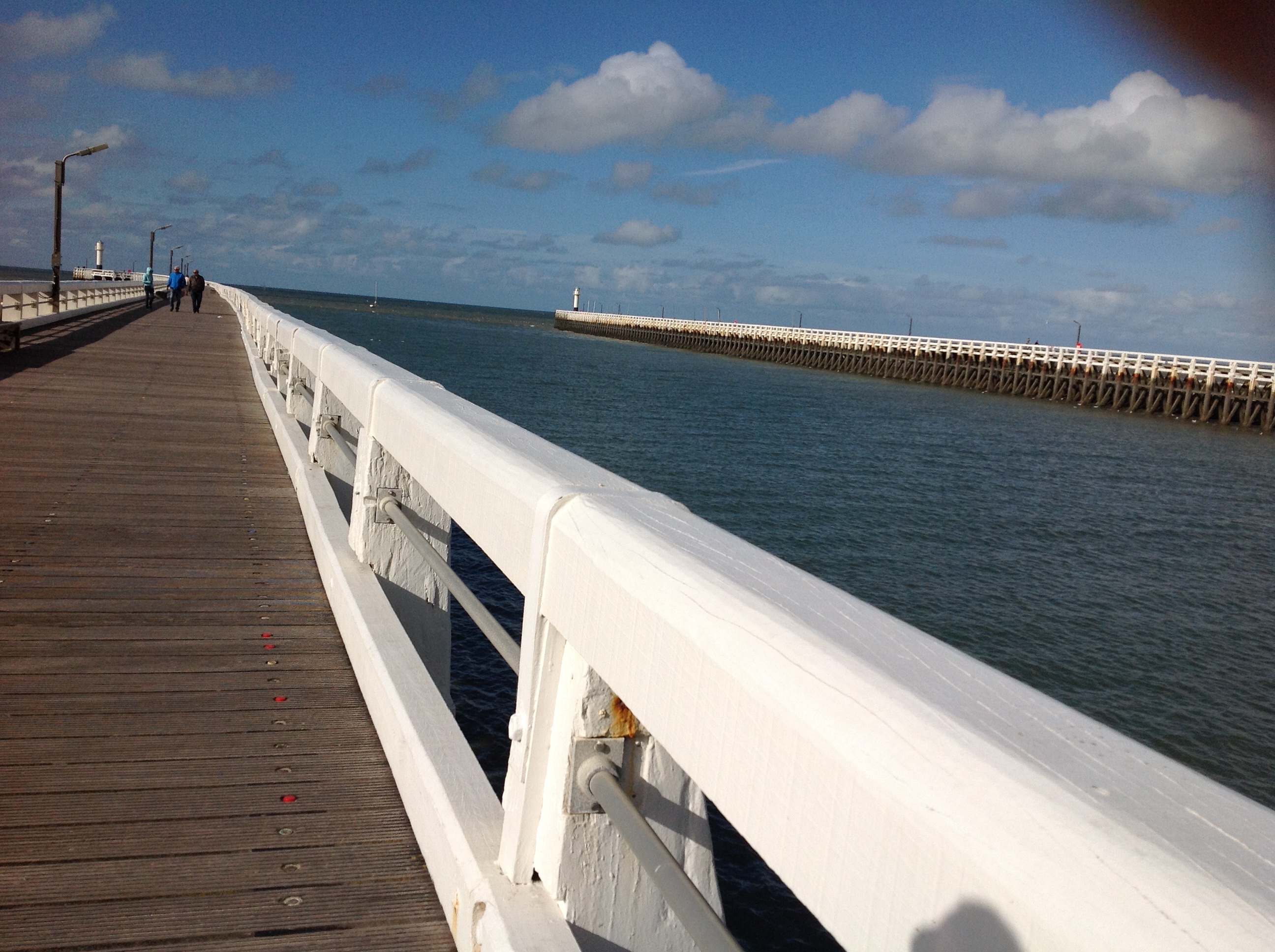 We set sail for Dunkirk, France on 18 October 2018. I had butterflies in my stomach as I saw the white cliffs of Dover receding behind me. I wondered how he must have felt. Was he worried about the submarines below him or the battles yet to come? After we arrived in Dunkirk we travelled across the border into Belgium to visit the grave of a man that my grandfather
 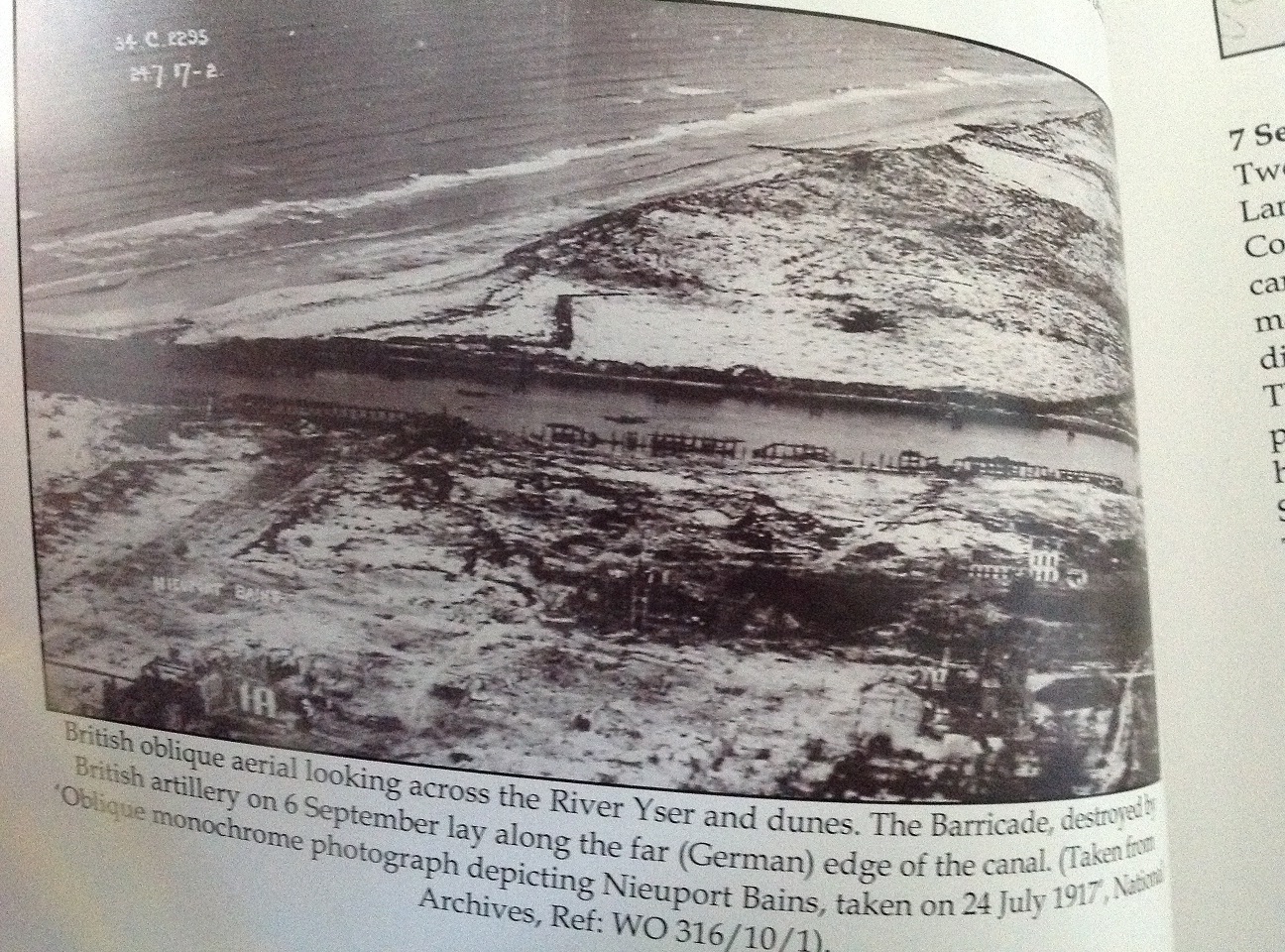 had mentioned in his diary, Se
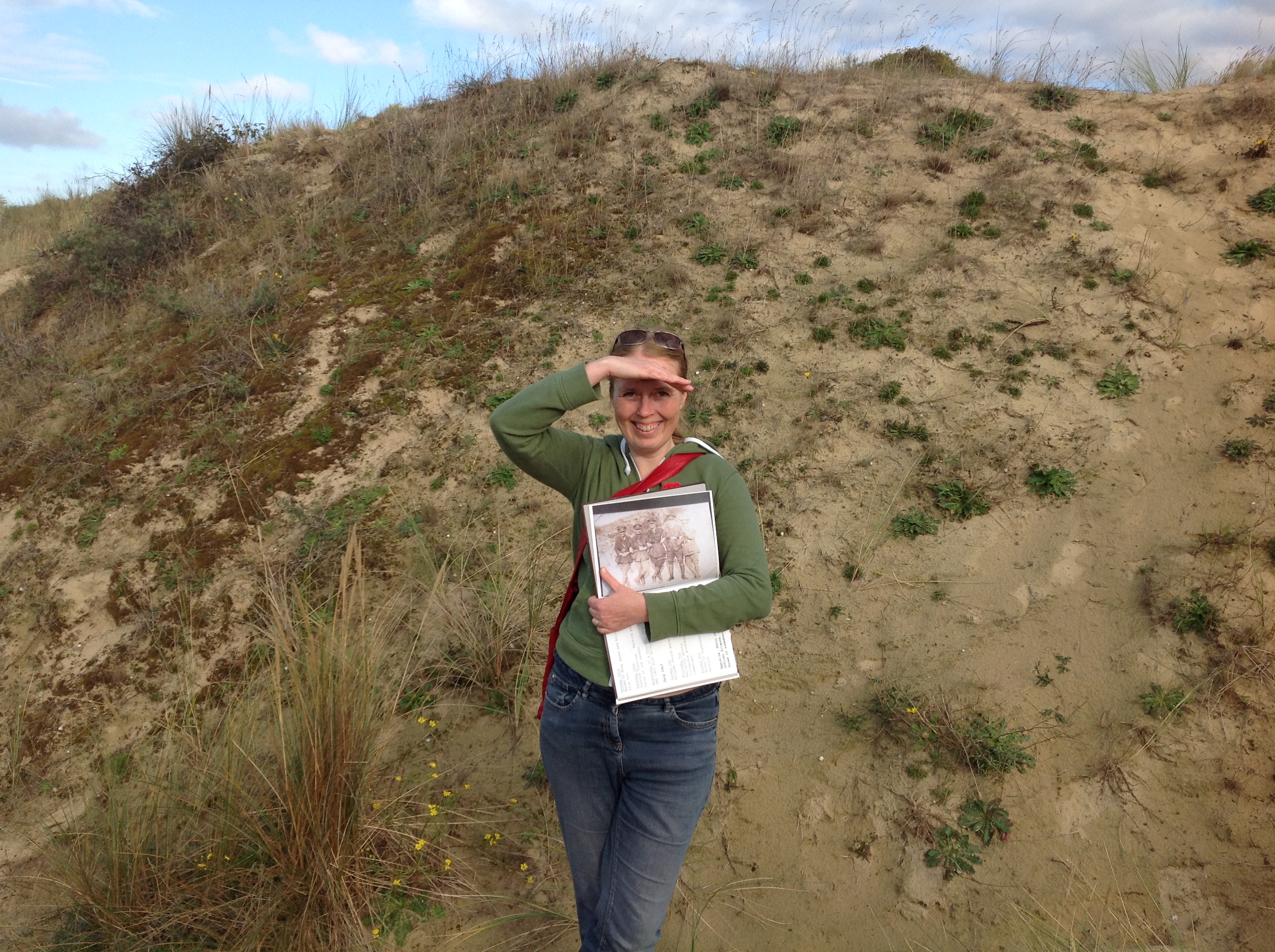
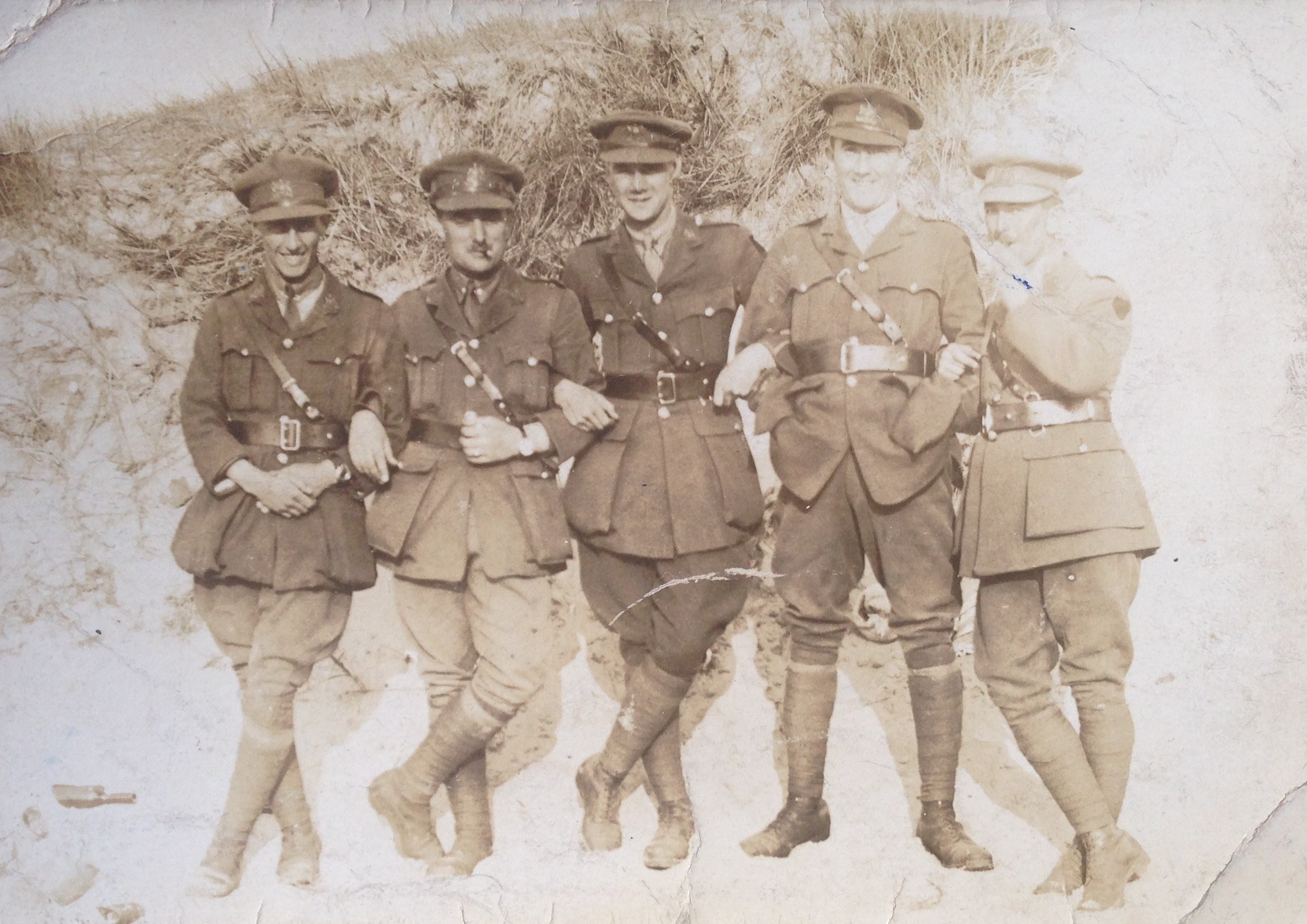 We then moved on to Bray Dunes where Jack had some R & R with his friends. Bray dunes is many hectares wide and I had no way of knowing exactly where he had stood but it was amazing to stand in the same area a 100 years on. I knew he had been here as it’s recorded in his own diary that he was billeted near here and in the battalion war diary. A photo also exists of Jack and some of his officer friends, obviously enjoying some R & R as there is a beer bottle in the photo and they all look very relaxed. I only wish I knew who the other officers were. Jack is on the far left of the photo.
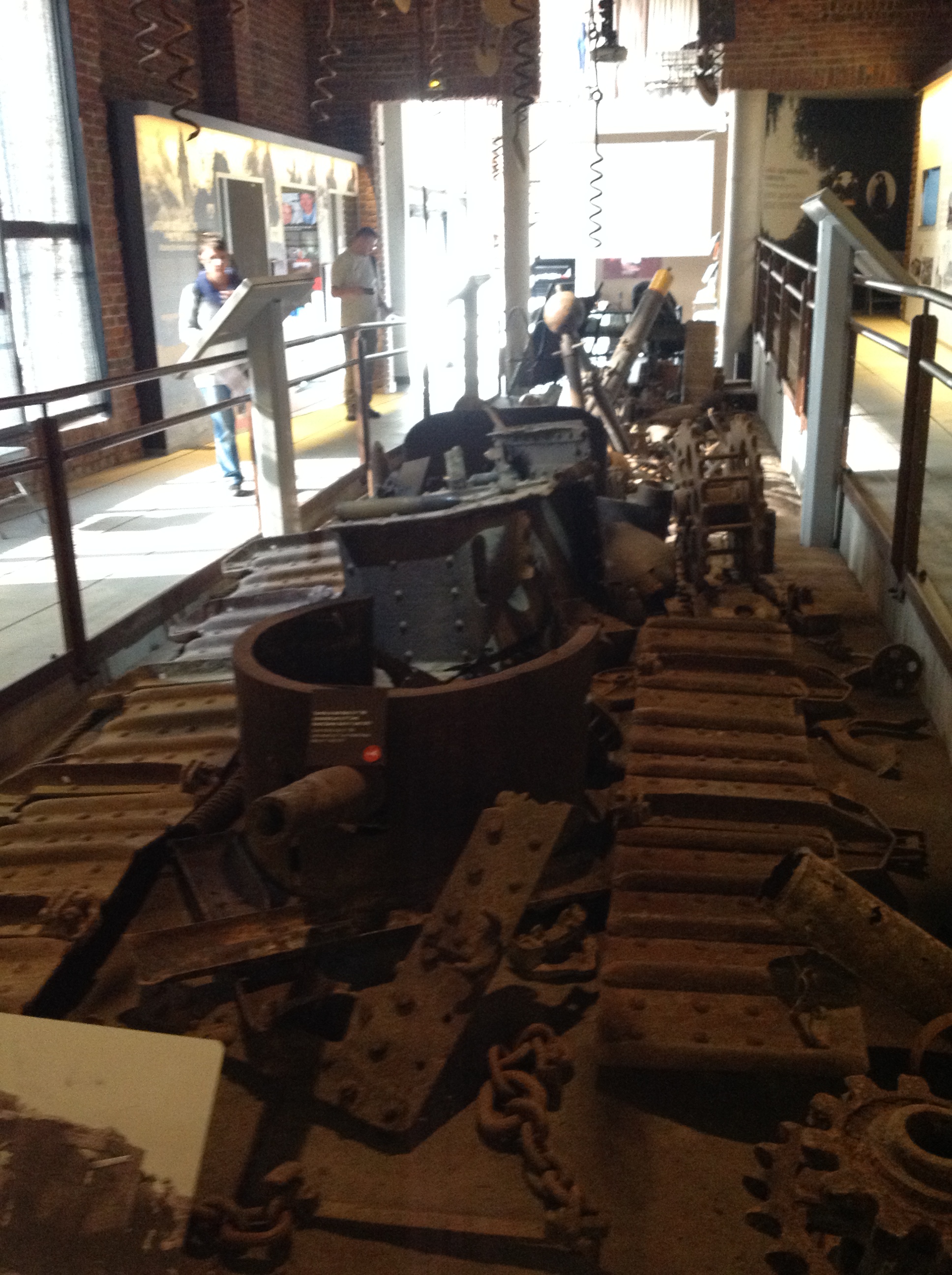
 The next day we made our way down towards Cambrai in France, via some of the villages that Jack had stopped in. They were nice to visit but gave very little feel for the war so we decided to visit some of the WW1 museums in the area. We found a fantastic little museum in Bullecourt. A local farming couple had dug up many items on their land over the years and donated their finds and the museum for future generations to see after they had died. There was even the remains of a WW1 tank. Next we went on to the Wellington Tunnels in Arras, a fascinating piece of history. Originally they were
  Roman and medieval quarries which had been expanded by the allies, particularly the New Zealanders to create an underground complex with the intent of surprising the enemy. We had Tommy shaped safety helmets to wear and descended down into the tunnels. We had an amazing young guide who flipped constantly between French & English and explained the history of the tunnels showing the many marks left behind. Just as in the trenches many tunnels were named after places back home to make it easier to find ones way around. The intention was to blow open the tunnels and launch a surprise attack of 24,000 men against the Germans with a diversion happening further down the line. It worked too but sadly the troops received no back up and they were told to wait a day which gave time for the Germans to reinforce. One has to wonder why.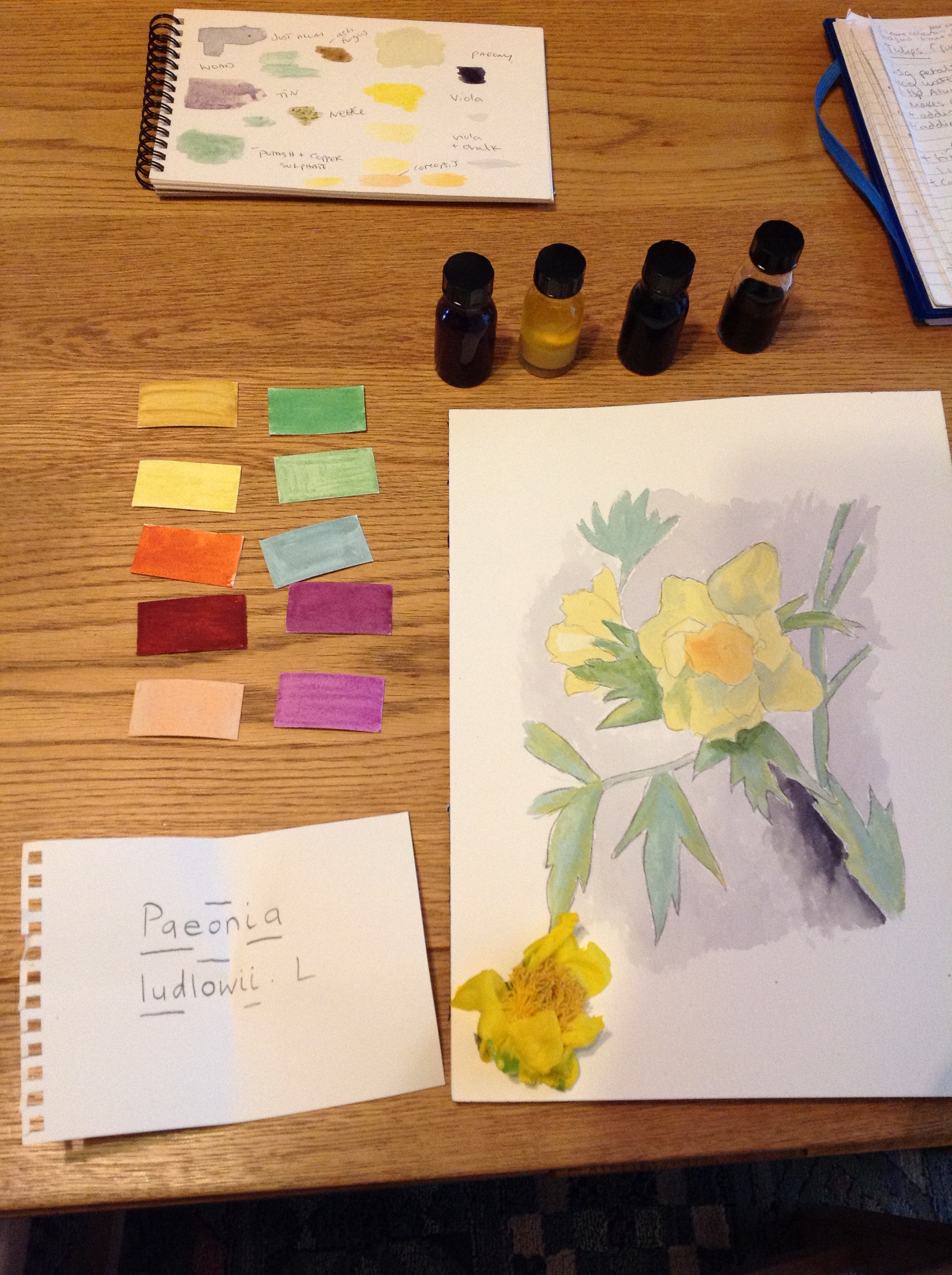
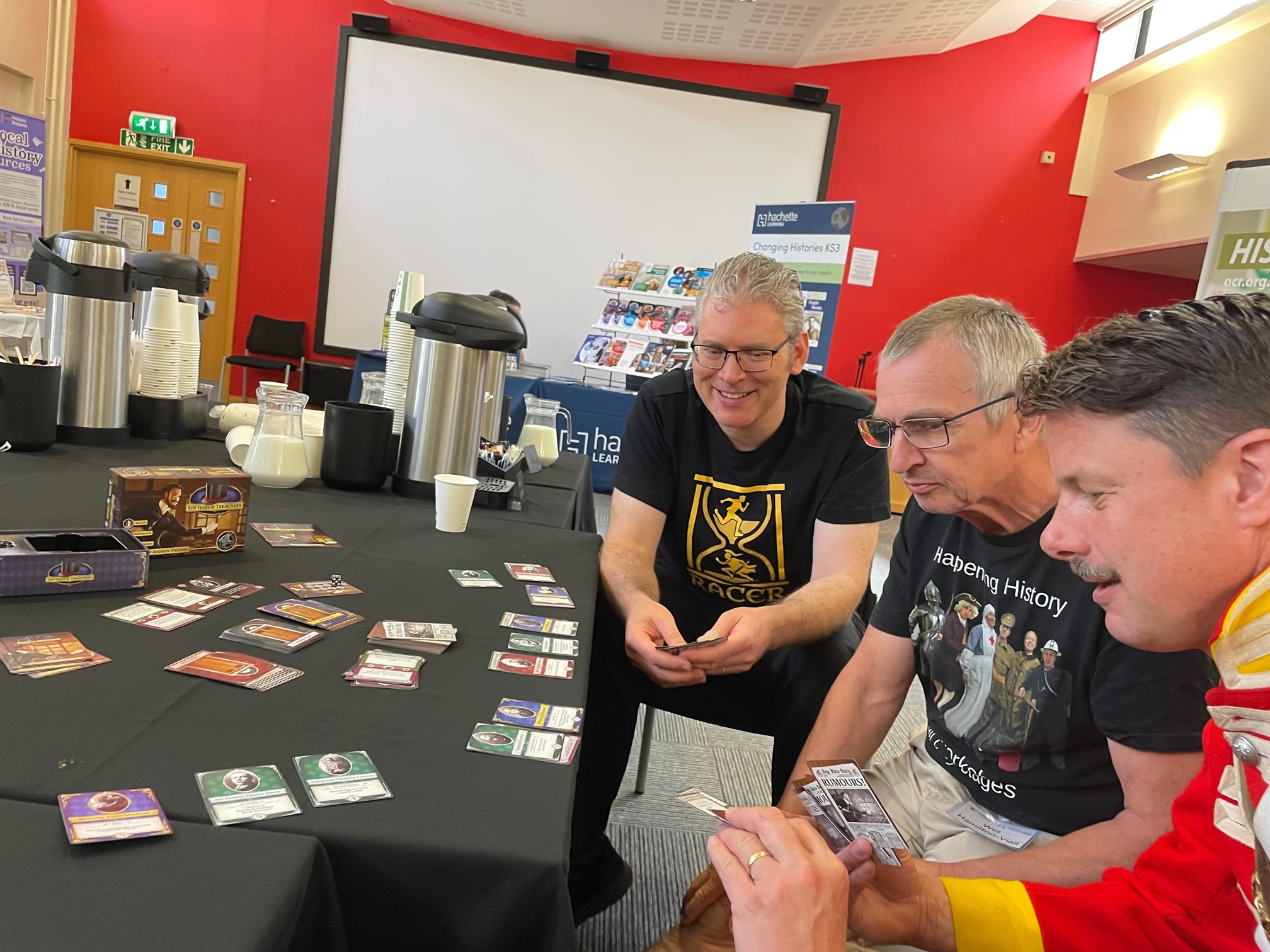
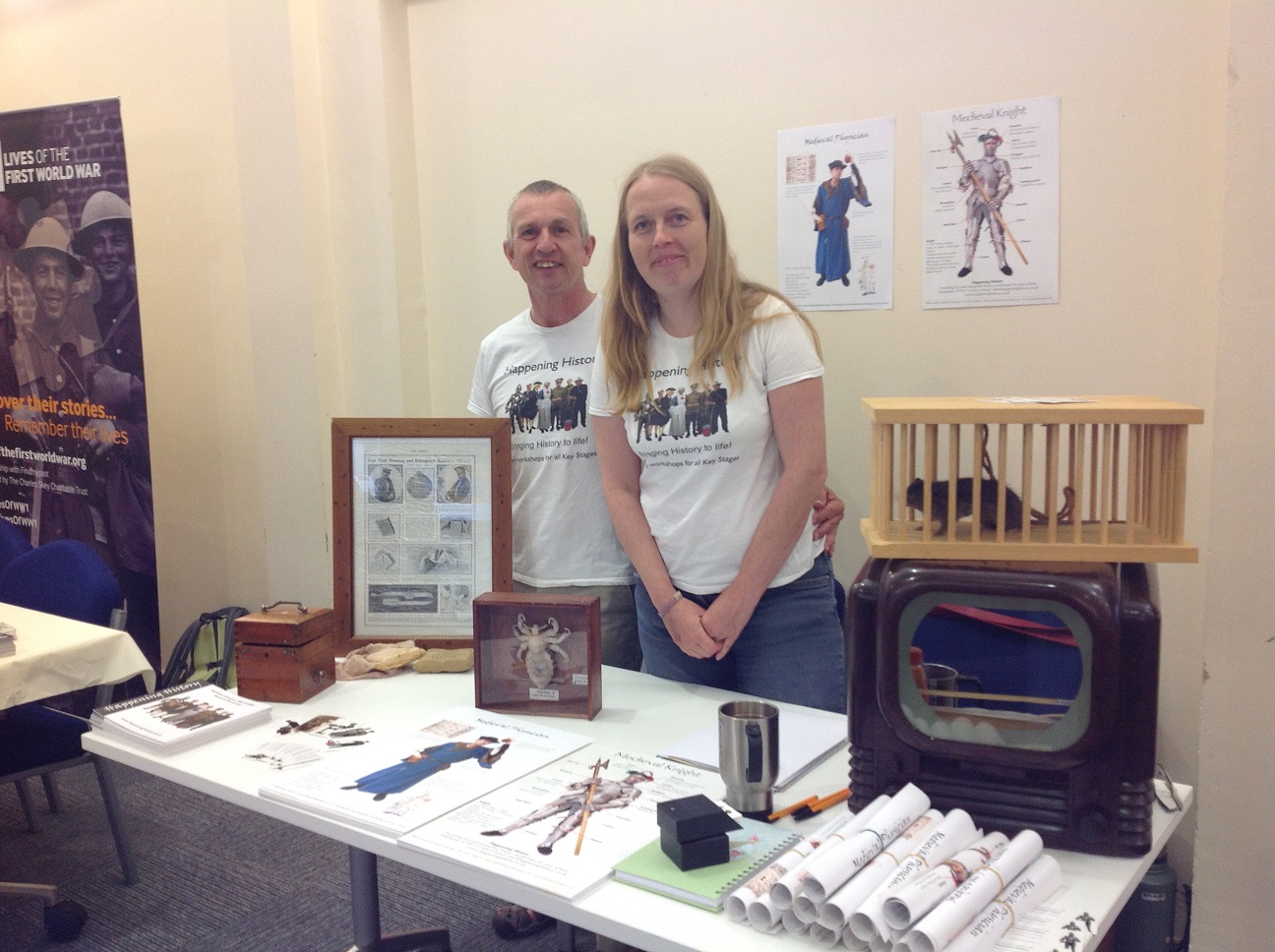 We have just returned from attending the 30th SHP teachers conference in Leeds this year. We were feeling a bit frayed around the edges having been working away from home for the best part of the last month. If I’m honest, having been a little unwell recently in Cumbria, I just wanted my own bed and own things around me but we were extremely pleased we made the effort to attend as we have returned enthused and rejuvenated from the inspiring environment it provides.
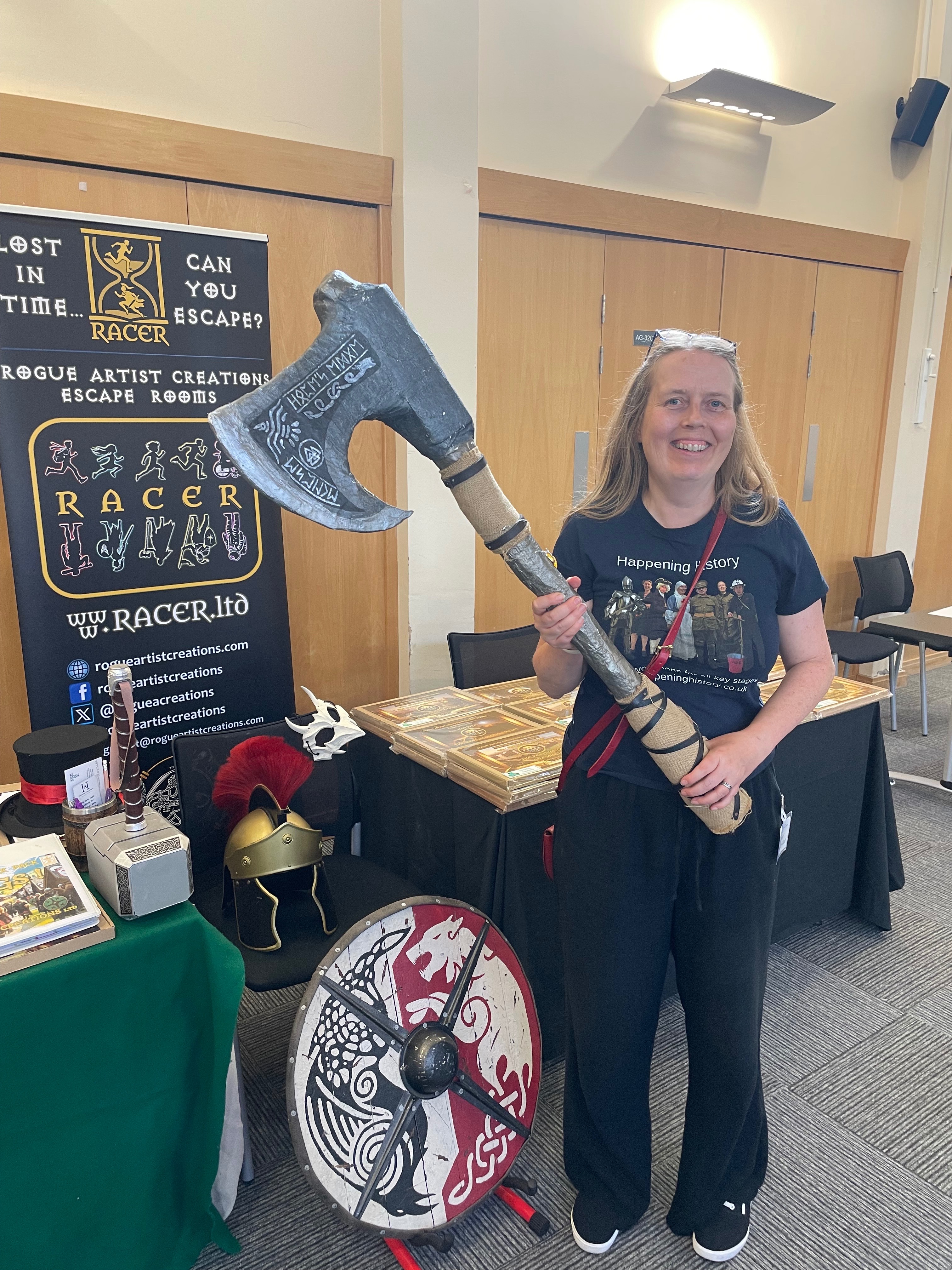
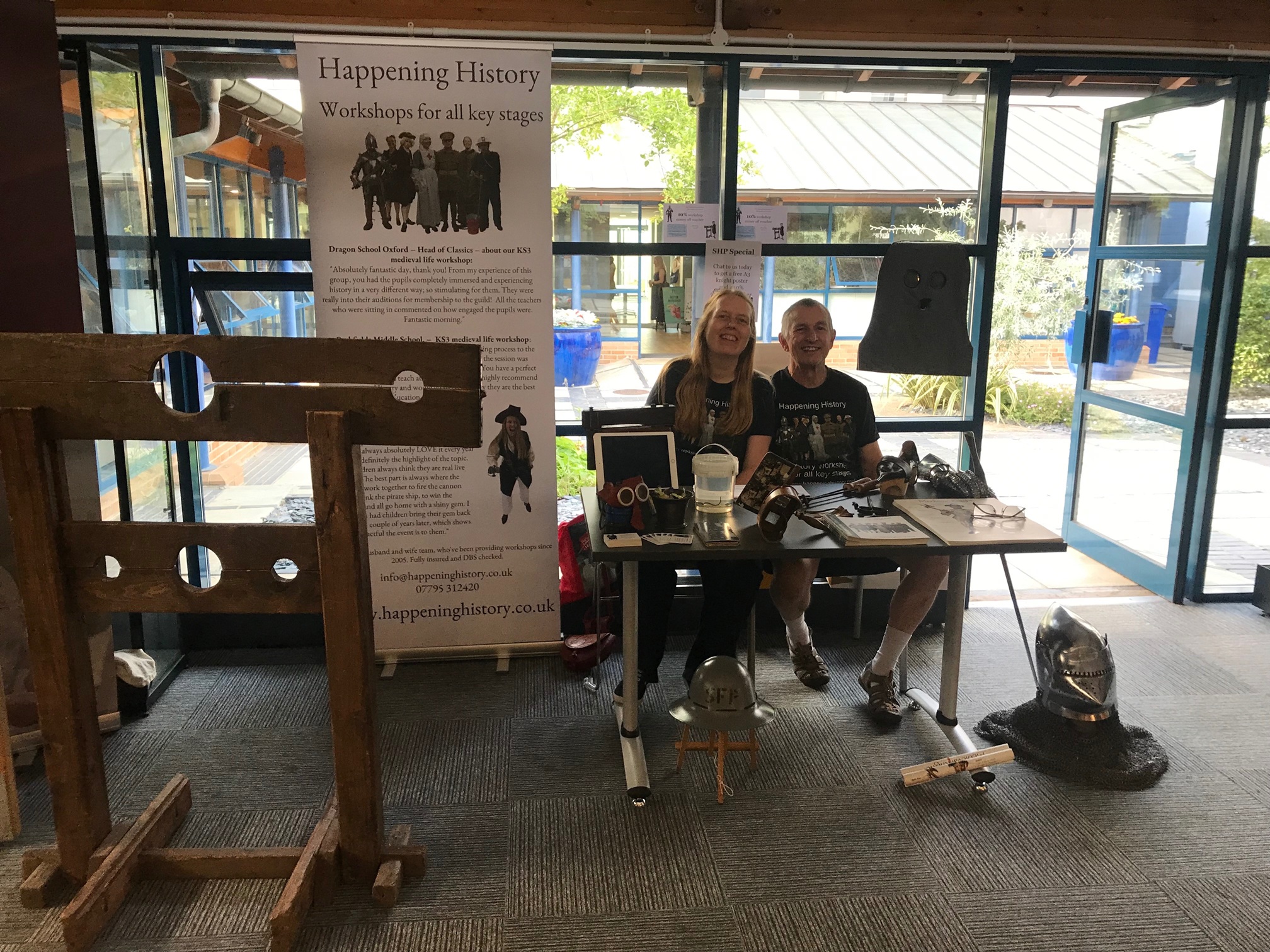
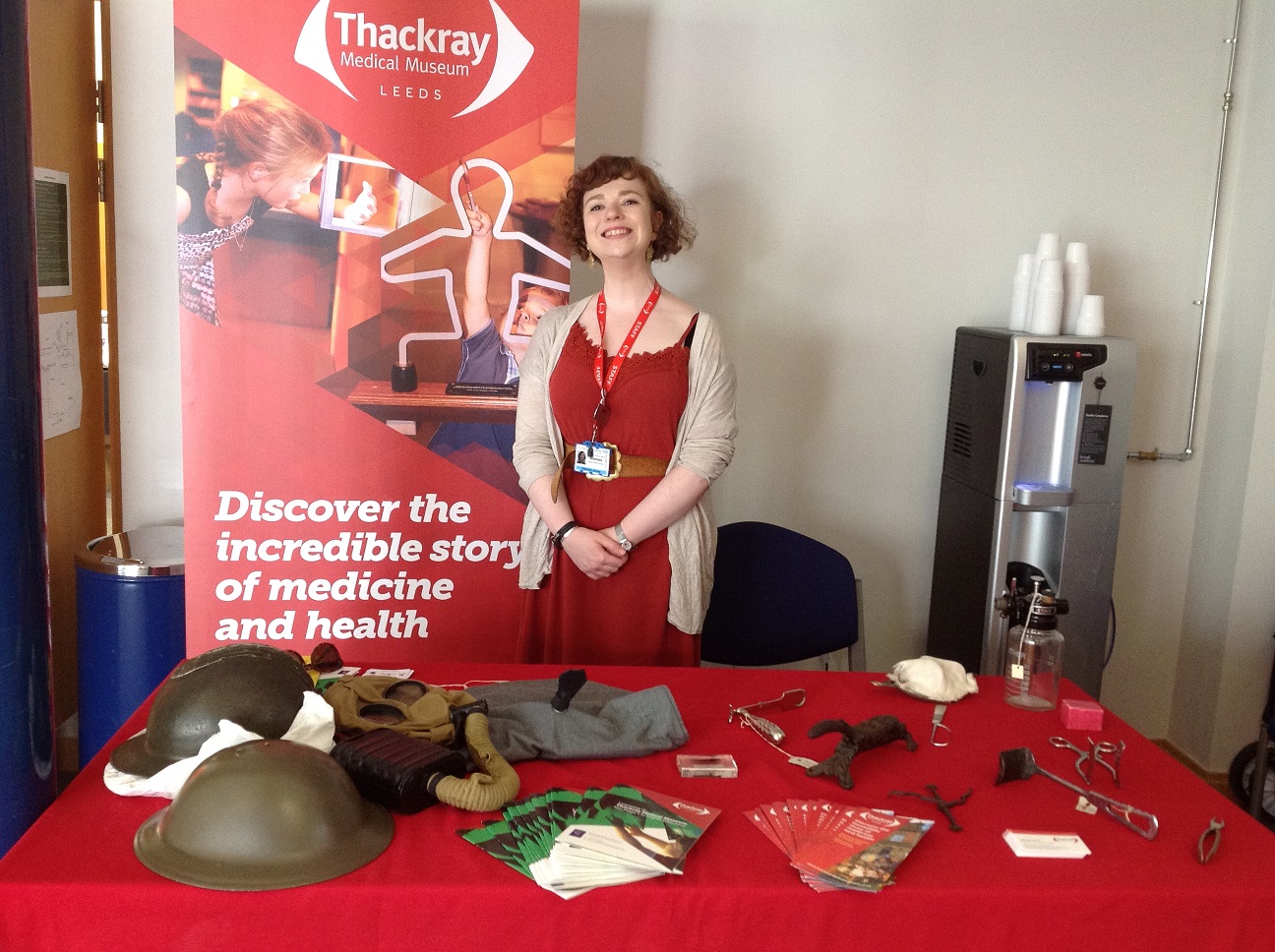 We had this year decided not to bring so much stuff to display and not to dress up in costume, instead opting for our work t-shirts which clearly showed who we were and what we did. I wish I had more time to put thought in to what else to bring but it has been such a busy year.
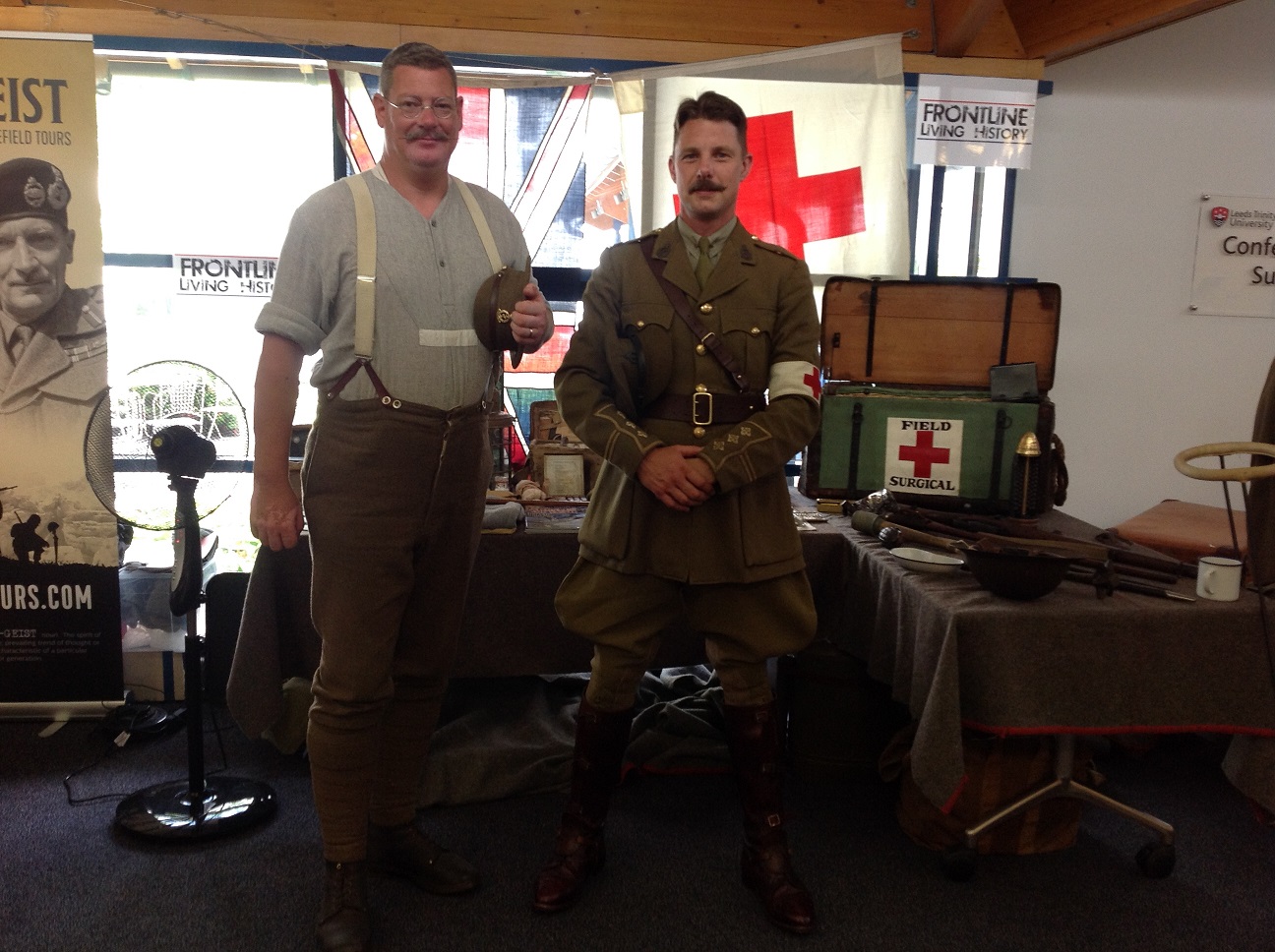 We also met David & Dickie from
 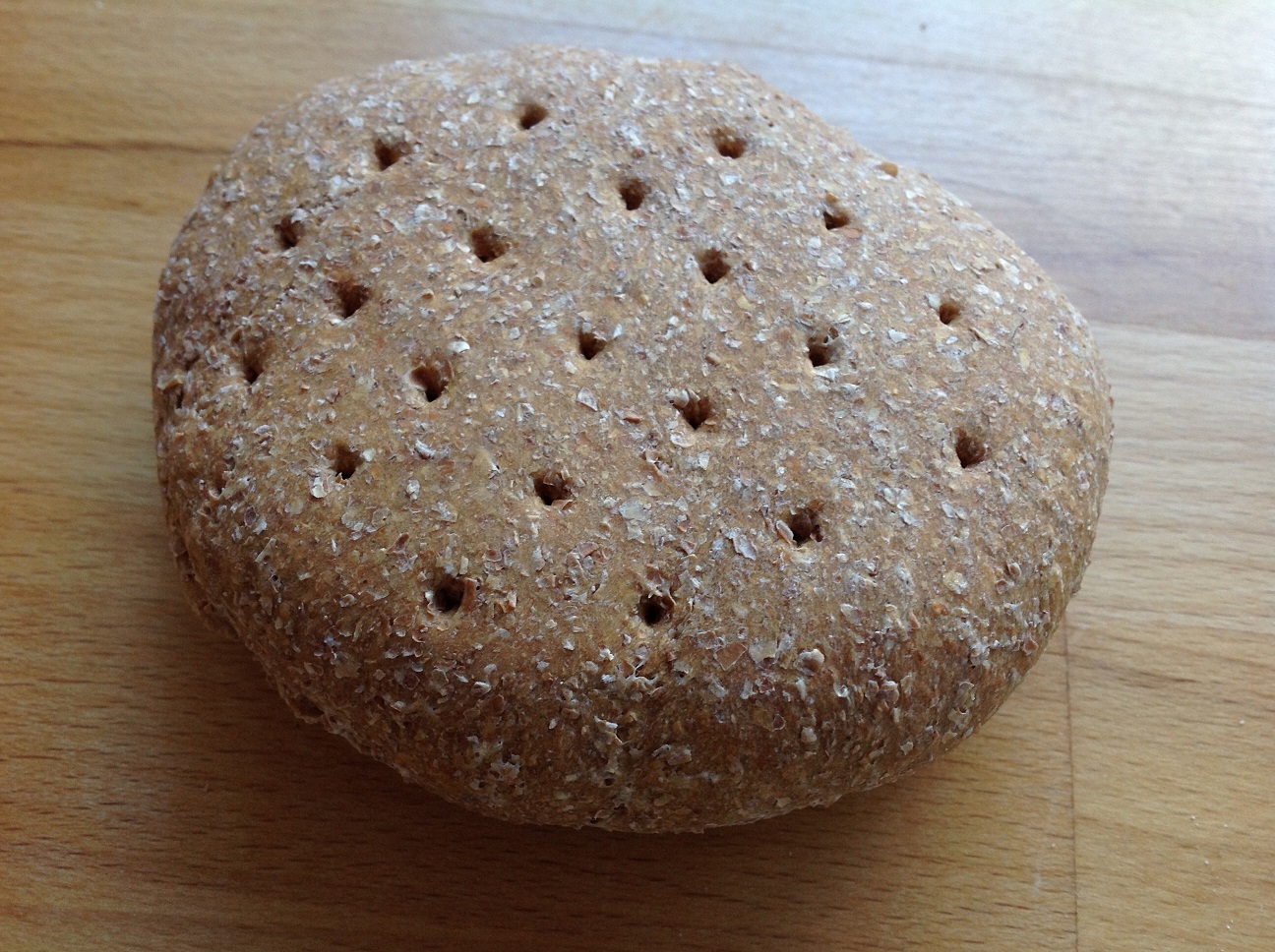 While we sometimes moan about the very early ups in our job (4AM quite often), it is nonetheless a very varied job and there is never a chance to be bored. The favourite part of my job is creating a new display. Our latest project is a pirate display for schools, it’s something we’ve thought about for many years and finally decided to turn our attention to as we reckon it’ll be great fun. One of the aspects that we’re going to cover is the kind of food that sailors and pirates might have to live on. In the age of sail when everywhere was a long way from everywhere else, access to constant fresh supplies would have been difficult and voyages could be very long. They needed to find ways to store food long term. Until tinned food was invented (by the French) in the early 19th century, one of the most important foods was ships biscuits (which became known as hard tack later one). These were basically 4oz unleavened rolled sized savoury bread biscuits that had been baked to within an inch of their lives, to drive out all the moisture.
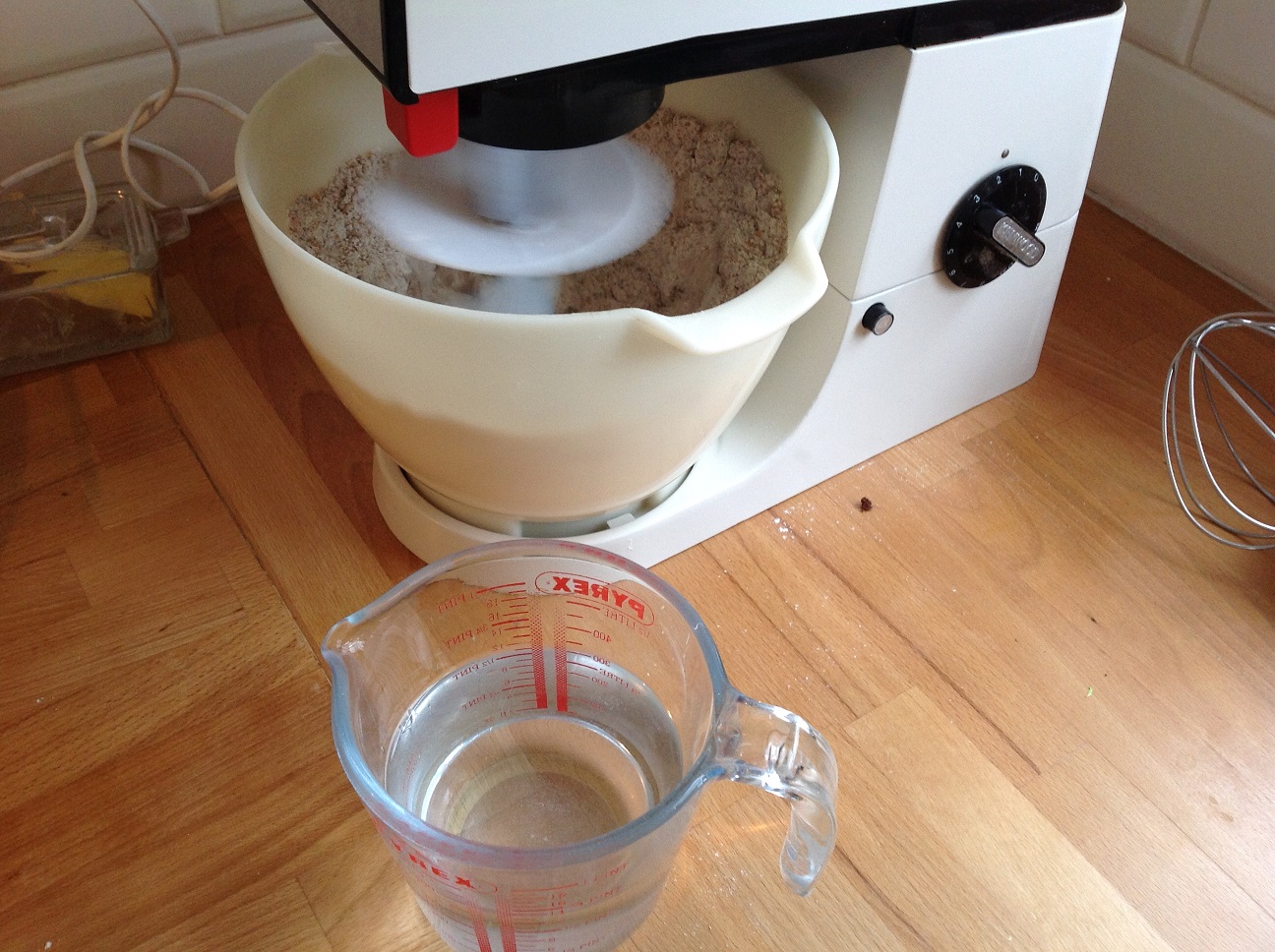 The recipe he gives is a little loose by modern standards which outline every ingredient to the nearest gramme but I’m used to making bread so this didn’t phase me. I started by measuring out 2lb of wholemeal flour, to which I added half an oz of salt. This is about the same amount I’d normally use to make the same quantity of leavened bread. If you were baking them purely for show, I suppose you could use more to help preserve them longer, although they will last a long time on their own. Normally at this juncture I would be adding dried yeast to just over a pint warm water and mixing it in. I think I added about 2 thirds of a pint of cold water to make, as Jas suggests a stiff dough. The amount you will need will depend on your flour, different flours will need differing amounts. Normally in bread making, you don’t want too tight a dough or the bread won’t rise very well and you end up with a dense loaf.
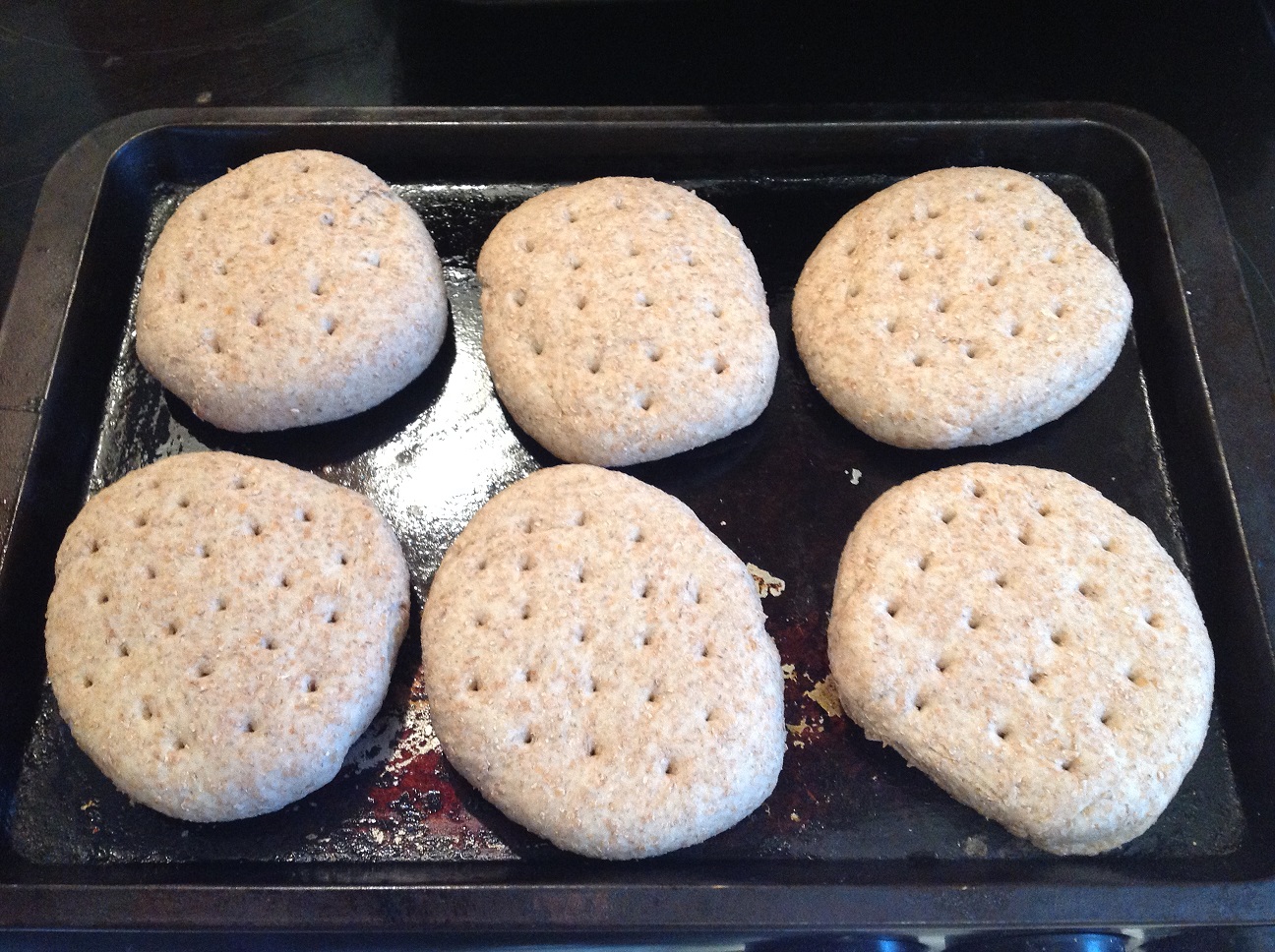 I had already greased a couple of baking trays, so the next step was to divide the dough into 8 equal portions. Although I used 2lb of flour which would have yielded the suggested 4oz portion (there are 16oz in a lb), as salt and water had also been added the pieces weighed more than this. I kneaded each piece a little more, formed it into balls and rolled it to about half an inch thick and placed them on the baking tray. I then pricked the top as Jas suggested. I didn’t have the lovely wire fork that he used so my tool was a cake decorating tool. The heat range that he suggested cooking at worked out between 130 to 160 C on a fan oven like mine, so I chose 130 C as my oven seems to bake quite hot. I then baked them for 3 hours, checking them regularly.
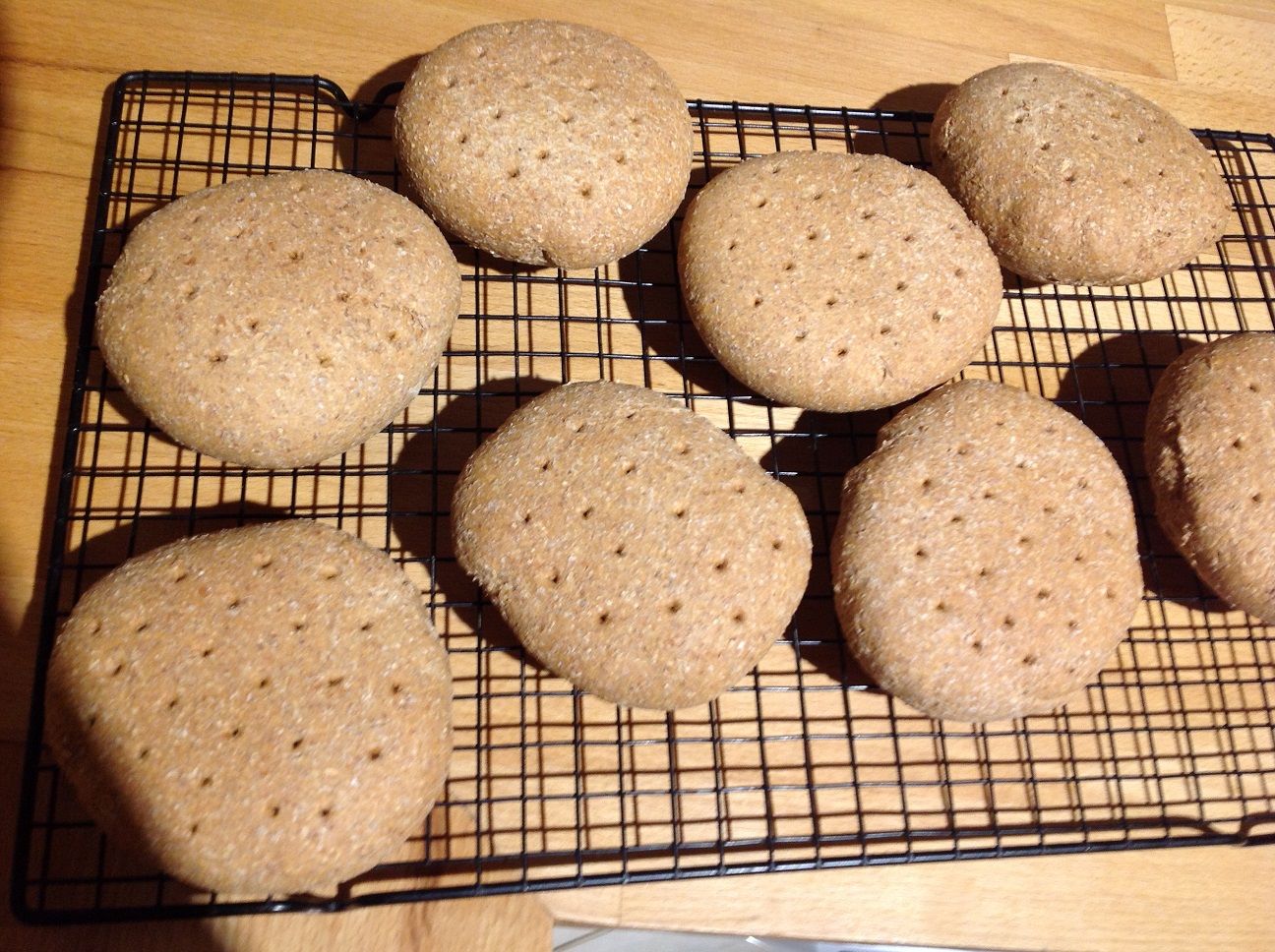 Once baked the biscuits were left to cool. They are extremely hard and made a dry knocking noise when tapped. Wel was keen to try one to see what it was like, he picked the fattest biscuit. He tried eating it with his teeth but this wasn’t possible so he cut one in half and then tried dipping it in soup. This sort of worked but the biscuit was still very hard. Jas mentioned that they were dipped often in sack (fortified wine), brandy or wine or ground up like flour and I can quite understand why. It was not an enjoyable eat and we didn’t finish eating the whole biscuit.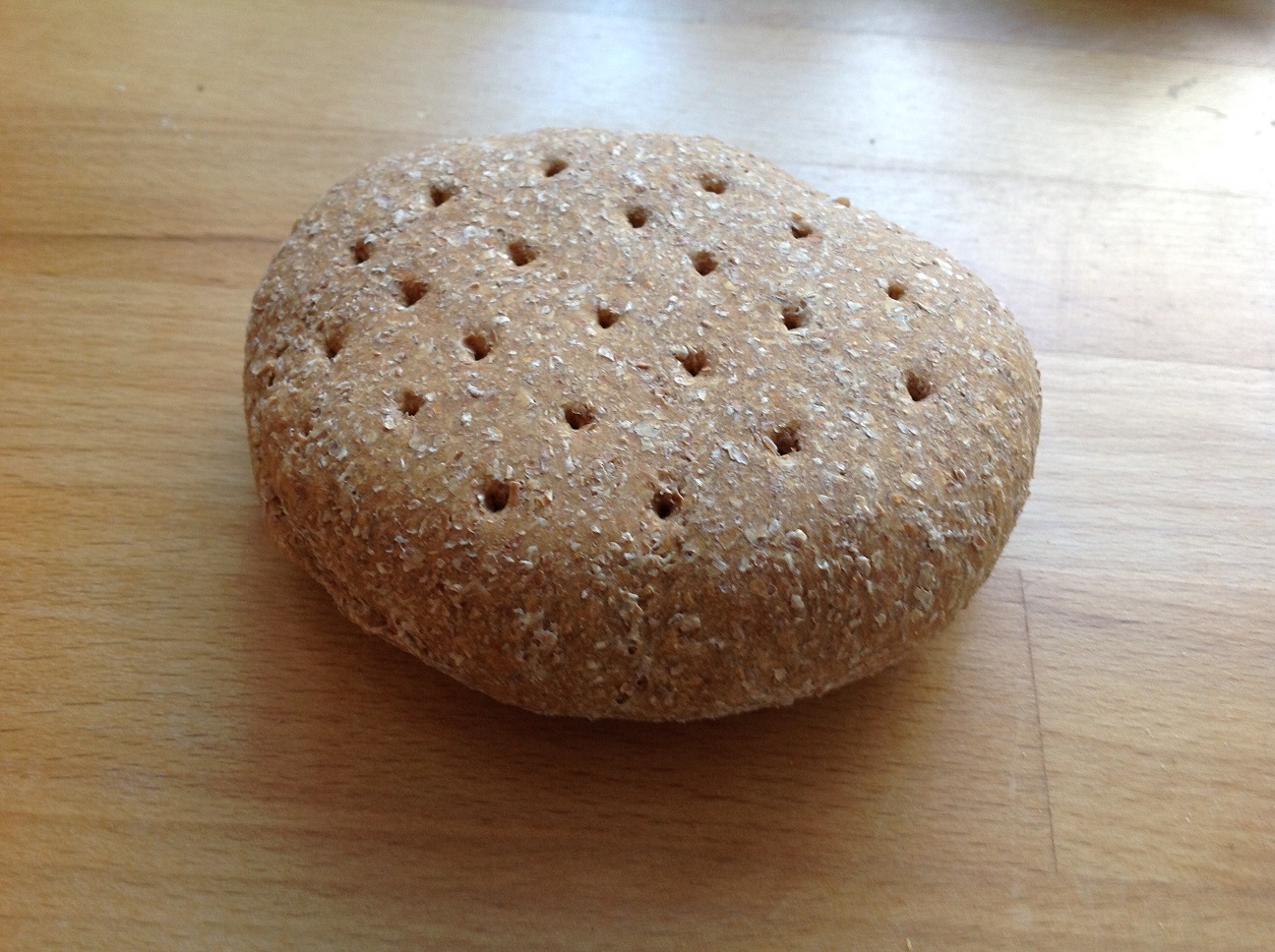
 Happening History
You must be logged in to post a comment.